Yemeni Human Rights Ministry Documents 3,334 Houthi Violations That Left 1,849 Civilian Victims
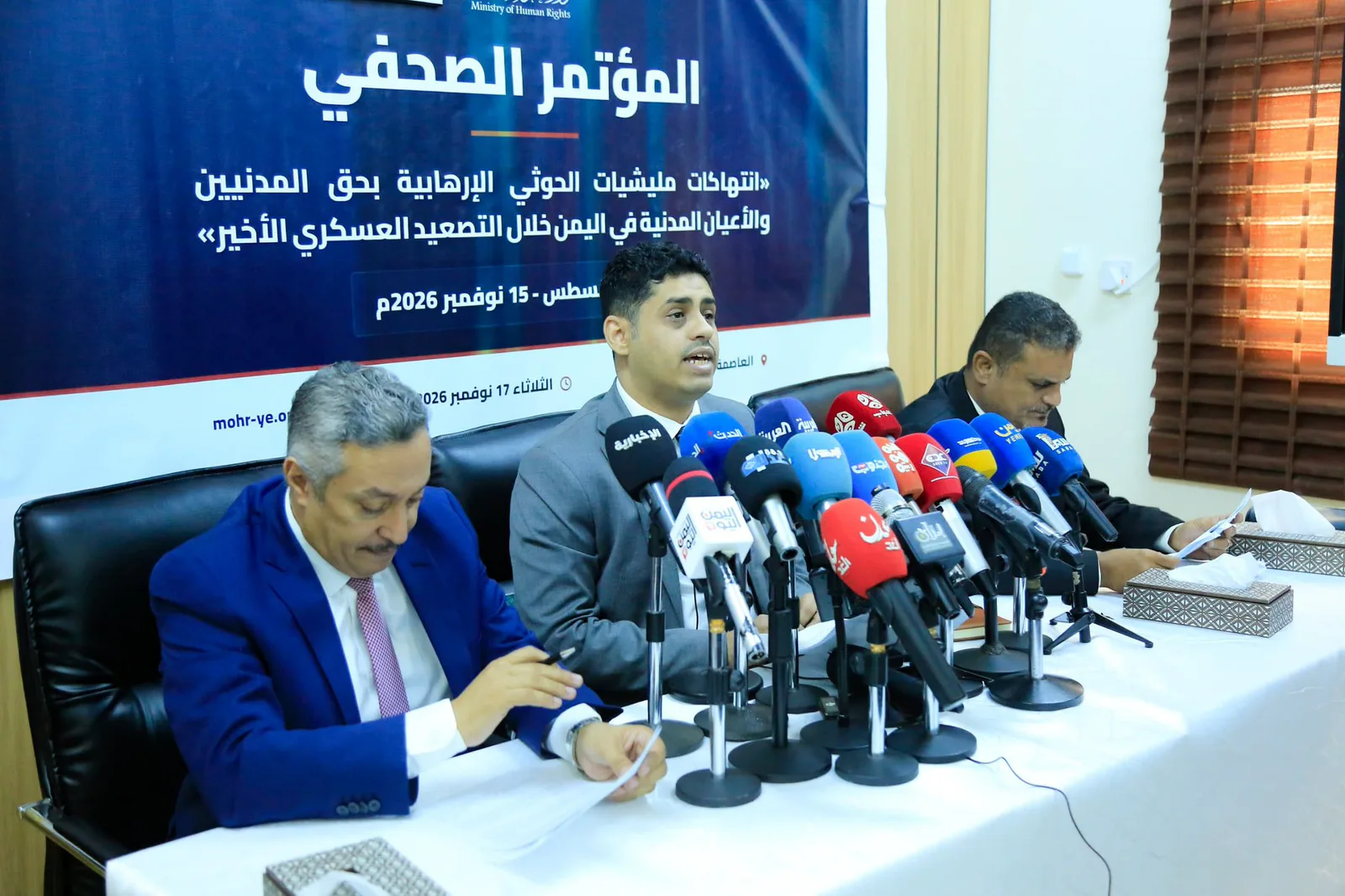
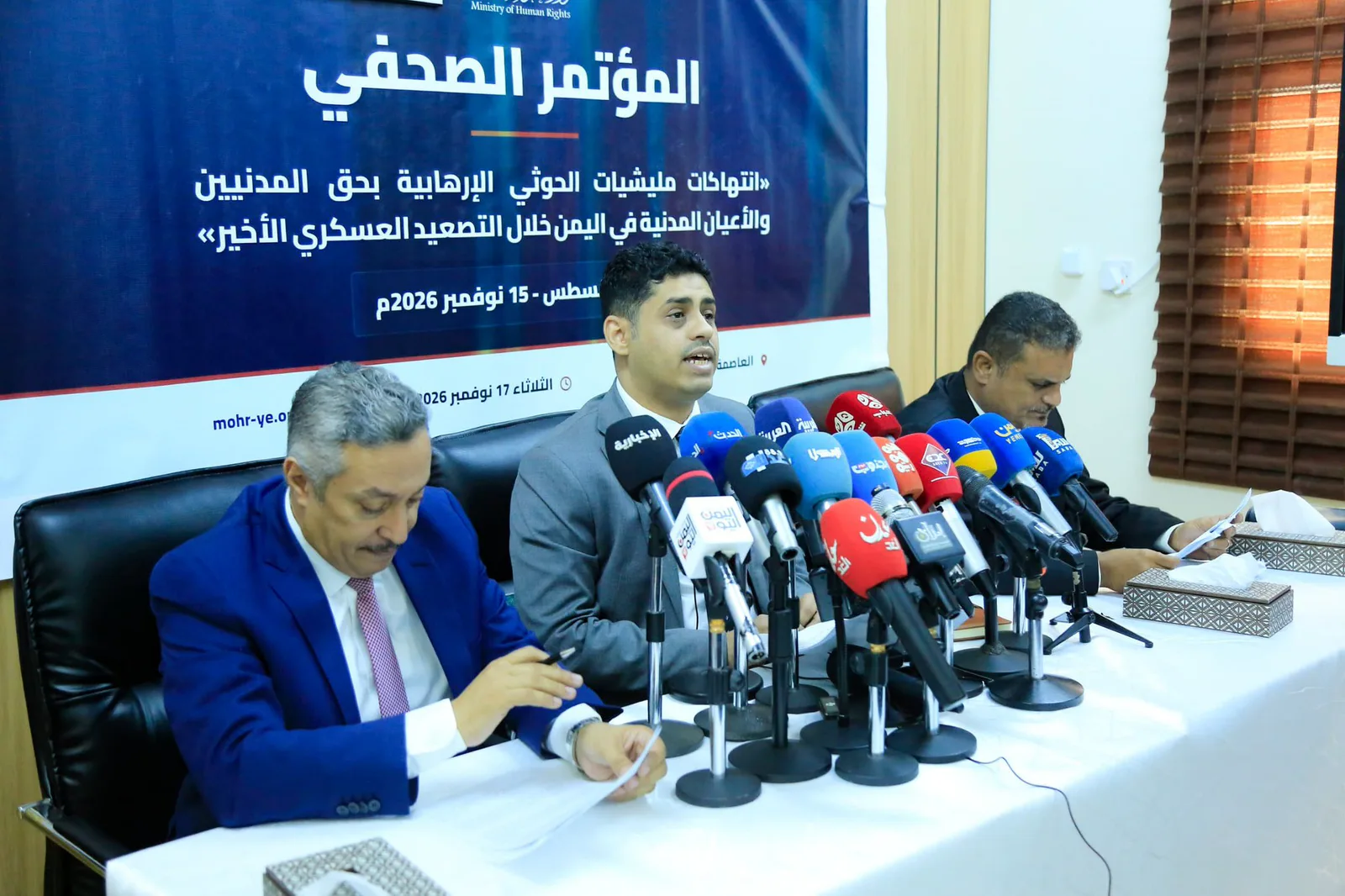
Yemen's Ministry of Human Rights announced at a press conference in Aden that it had documented 3,334 violations committed by the Houthi militias between August and November 2026, which left 1,849 civilian victims, in addition to the shelling of residential neighborhoods and educational and health facilities, the siege of the city of Taiz, and the displacement of more than 347,000 people.
At a press conference on Tuesday in the temporary capital Aden, Yemen's Ministry of Human Rights presented a comprehensive human rights briefing on violations by the Iran-backed terrorist Houthi militias against civilians and civilian objects in Yemen during the latest military escalation.
The ministry recorded 3,334 violations during the period from August 1 to November 15, 2026, based on monitoring and documentation work carried out by its field teams and data from approved sources.
Speaking at the conference were Minister of Human Rights Mushaddal Mohammed, Minister of State for Women's Affairs Dr. Ahad Ja'sous, Deputy Minister of Human Rights Nabil Abdulhafiz, and Director-General of Complaints and Reports Imad Sinan. Also attending were Minister of Culture and Tourism Muati Dammaj, representatives of the National Commission of Inquiry into Allegations of Human Rights Violations, as well as representatives of international organizations, civil society organizations, and local and international media outlets.
الخسائر البشرية وأنماط الانتهاكات
Minister of Human Rights Mushaddal Mohammed reviewed the human toll cited in the briefing, which reached 1,849 civilian victims, including 594 killed and 1,255 wounded. Children accounted for 215 of the dead and wounded, women numbered 196, and the elderly more than 80. The ministry also recorded 127 people killed in separate sniper incidents.
The briefing reviewed shelling incidents that struck residential neighborhoods, villages, markets, and sites sheltering displaced people, including the Jaw al-Naseem camp in Marib, the Sina district and the Al-Hadara popular market in Taiz, as well as sites for displaced people and educational and health facilities in Lahj.
The ministry documented 53 attacks involving ballistic and guided missiles, in which at least 121 missiles were fired, and monitored the use of at least 137 attack and suicide drones. Ten incidents of mine or explosive device detonations left 13 people dead and 16 others injured.
The briefing reported damage to 412 homes, residential buildings, and shelters, and 93 educational facilities subjected to shelling, storming, unlawful use, or other forms of damage. Schooling was halted at 243 schools, affecting more than 137,000 students. In the health sector, the ministry recorded 312 cases linked to assaults and damage to health facilities and centers, and 19 attacks on ambulances, including three cases of direct targeting and 16 cases of looting and confiscation.
The ministry also documented 233 cases of abduction, arbitrary detention, and enforced disappearance, including 25 cases documented by name and 208 in mass crackdowns, targeting students, educators, activists, and humanitarian workers. The briefing reported the death of UN employee Mohammed Ibrahim Al-Shami while in detention, as announced on October 31. The ministry also documented the killing of 260 children recruited by the militias and thrown into front lines.
حصار تعز وتداعيات النزوح
Deputy Minister Nabil Abdulhafiz addressed the tightening of the siege on the city of Taiz since the attacks escalated in September, and the disruption of vital routes, including the Taiz–Al-Kadha–Mokha road and the Haijat al-Abd road linking Taiz and Aden. The briefing explained that road closures and restrictions on movement through remaining crossings impeded civilians' movement and the delivery of food, drinking water, fuel, medicines, and humanitarian aid.
The briefing noted the United Nations' announcement on November 2 that all roads leading to the city had been closed due to the fighting and that delivery of regular commercial supplies had halted.
According to International Organization for Migration data cited in the briefing, more than 347,000 people were displaced as a result of the military escalation in western Yemen during the same period, with the governorates of Taiz, Lahj, and Aden receiving the largest numbers. The briefing noted the UN refugee agency's (UNHCR) warning that fighting was approaching the Kharaz camp in Lahj, which hosts about nine thousand refugees.
انتهاكات بحق النساء وتداعيات النزوح
Minister of State for Women's Affairs Dr. Ahad Ja'sous addressed in her remarks the violations targeting women and the impact of the escalation and displacement on their situation. In this context, the briefing noted the growing needs of displaced families for shelter, water, health care, and protection, praising the resilience of Yemeni women in confronting the conditions of war.
Source sabq