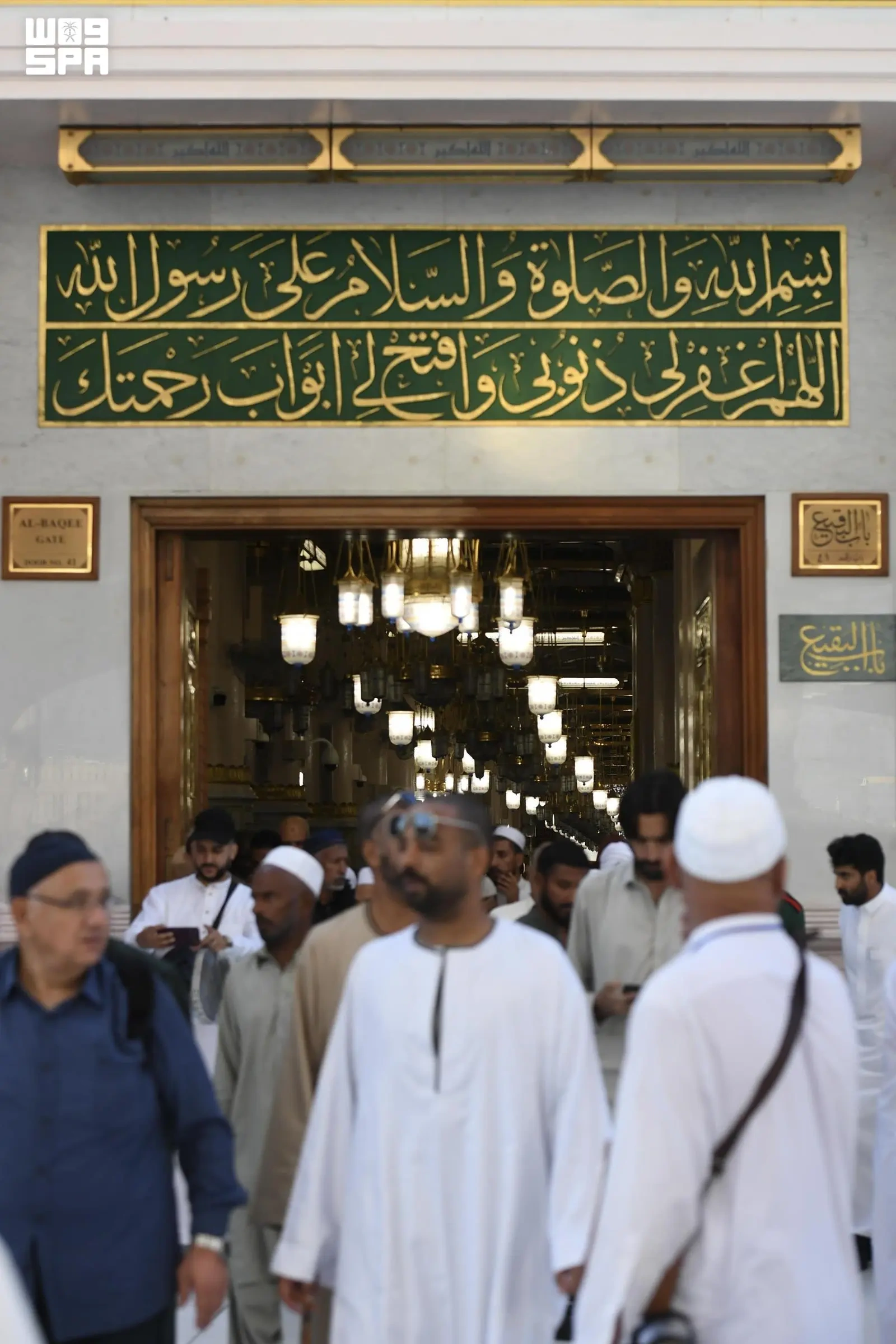
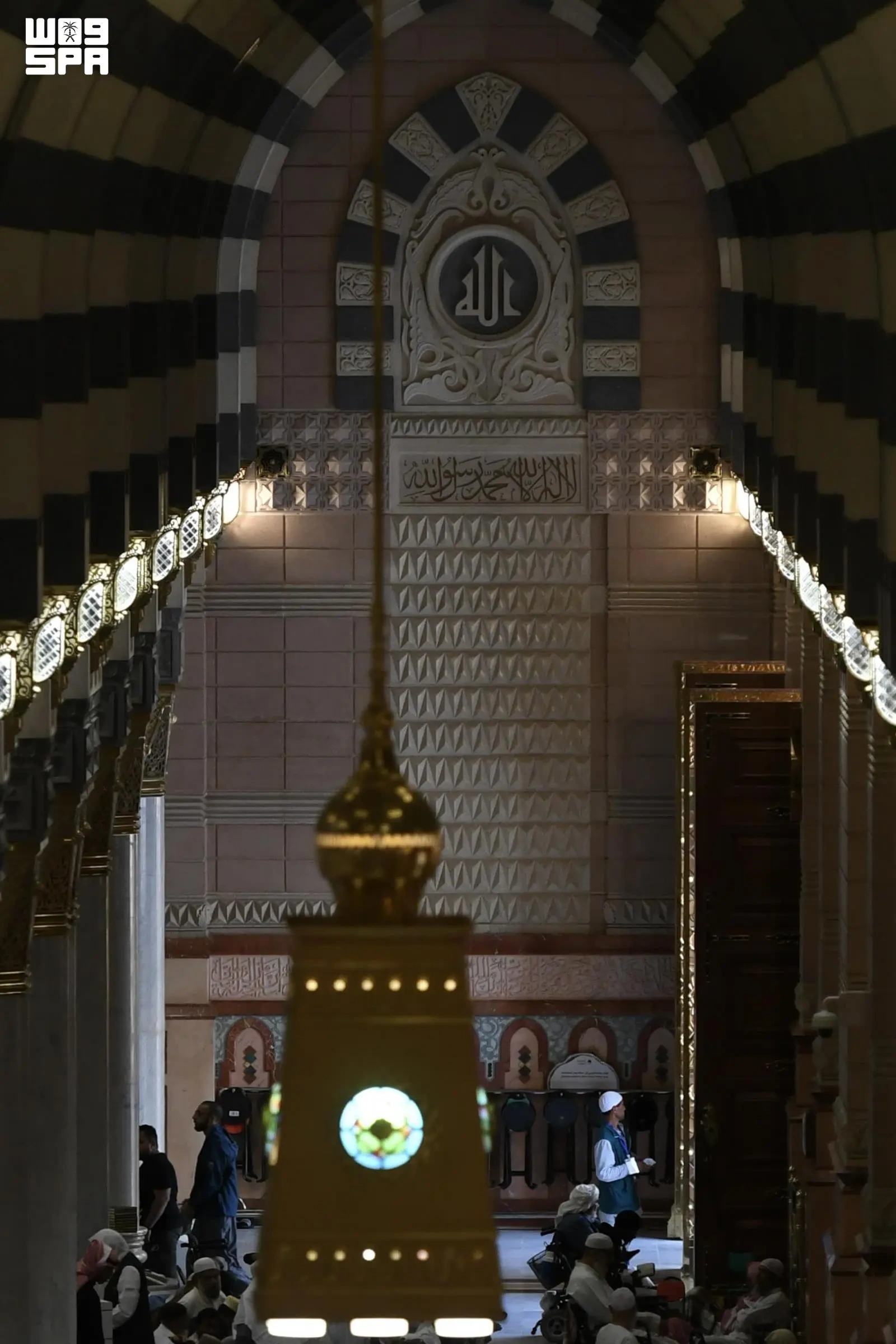
Artistic Details Reflecting the Richness and Heritage of Islamic Art Within the Prophet's Mosque
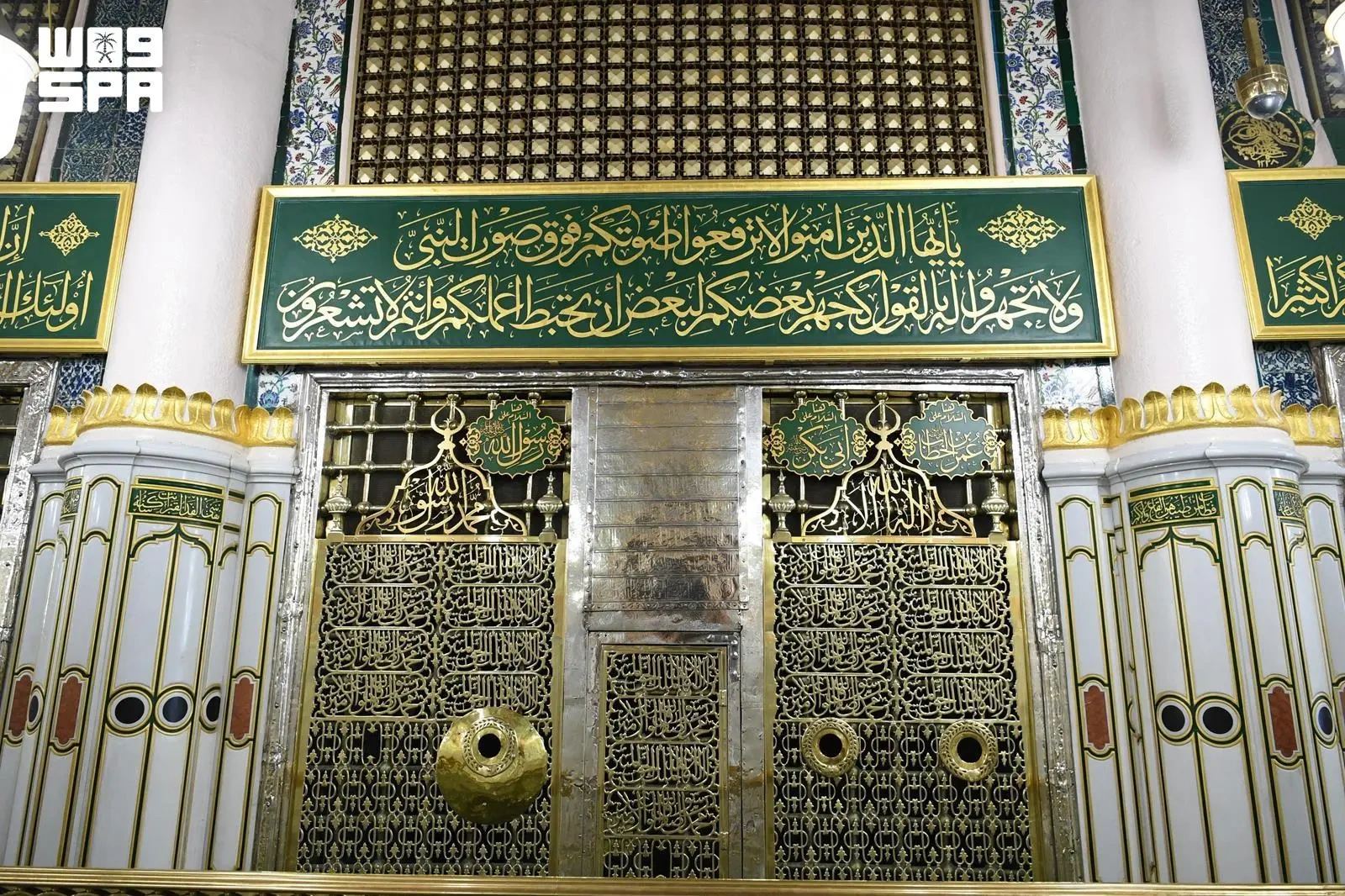
The inscriptions and wall decorations found in the Prophet's Mosque and some major mosques represent an extension of Islamic artistic civilization and its unique, diverse designs, tied to eras spanning hundreds of years, embodying the beauty and ancient civilization of Islamic art.
Islamic inscriptions cover numerous locations throughout the Prophet's Mosque and its facilities, including Quranic verses, Prophetic hadiths, the names of Allah, and botanical and geometric ornaments, meticulously written in Arabic calligraphy, most notably Thuluth and Kufic scripts, adorning the Prophet's mihrab, walls, columns, pillars, domes, chandeliers, and light fixtures inside the Rawdah Sharif and its surroundings in the old mosque, executed in calligraphic and aesthetic forms that highlight the beauty of Islamic art, which is celebrated worldwide on November 18 each year.
The Saudi expansions witnessed by the Prophet's Mosque have emphasized aspects of Islamic art in the architectural designs, as inscriptions and botanical decorations inspired by nature, in accordance with Islamic guidelines, adorn areas of the mosque's interior and exterior walls, distinguished by intricate details and inlays that reflect light, in addition to inscriptions on the minarets, facades, the qibla wall, and the entrances and gates of the Prophet's Mosque.
The aesthetics of Islamic art and its unique architectural designs embody the harmony of the Prophet's Mosque's architectural design with Islamic architecture, using materials such as marble, mosaics, and gold in executing the inscription forms, highlighting their beauty while preserving the traditional character of the inscriptions in keeping with the old compositions, showcasing the mosque's Islamic identity and representing an aspect of its Islamic artistic architectural identity, cementing its standing as one of the most important Islamic landmarks in the world.