Shenzhen: When Wars Reach the World's Arteries
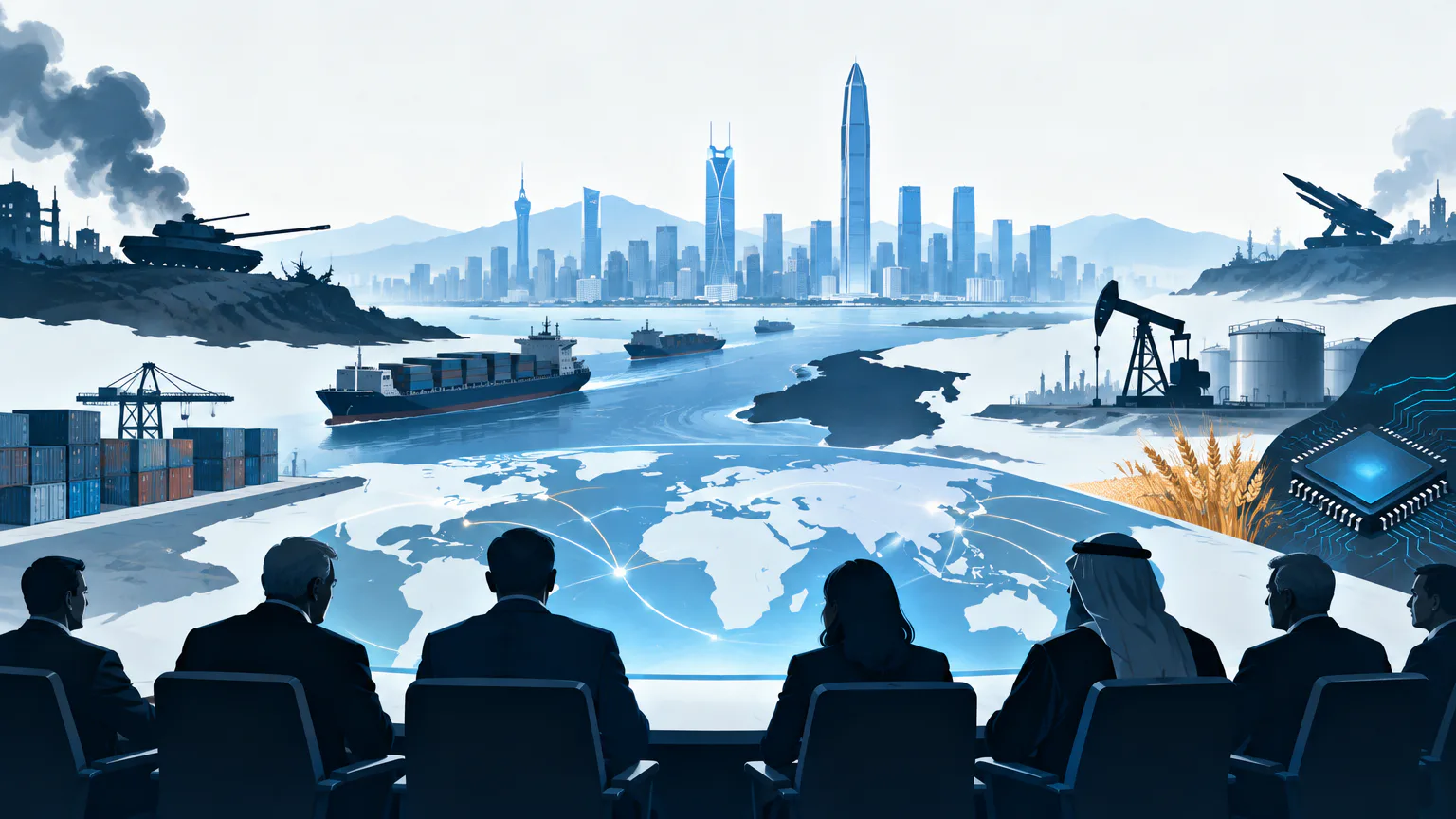
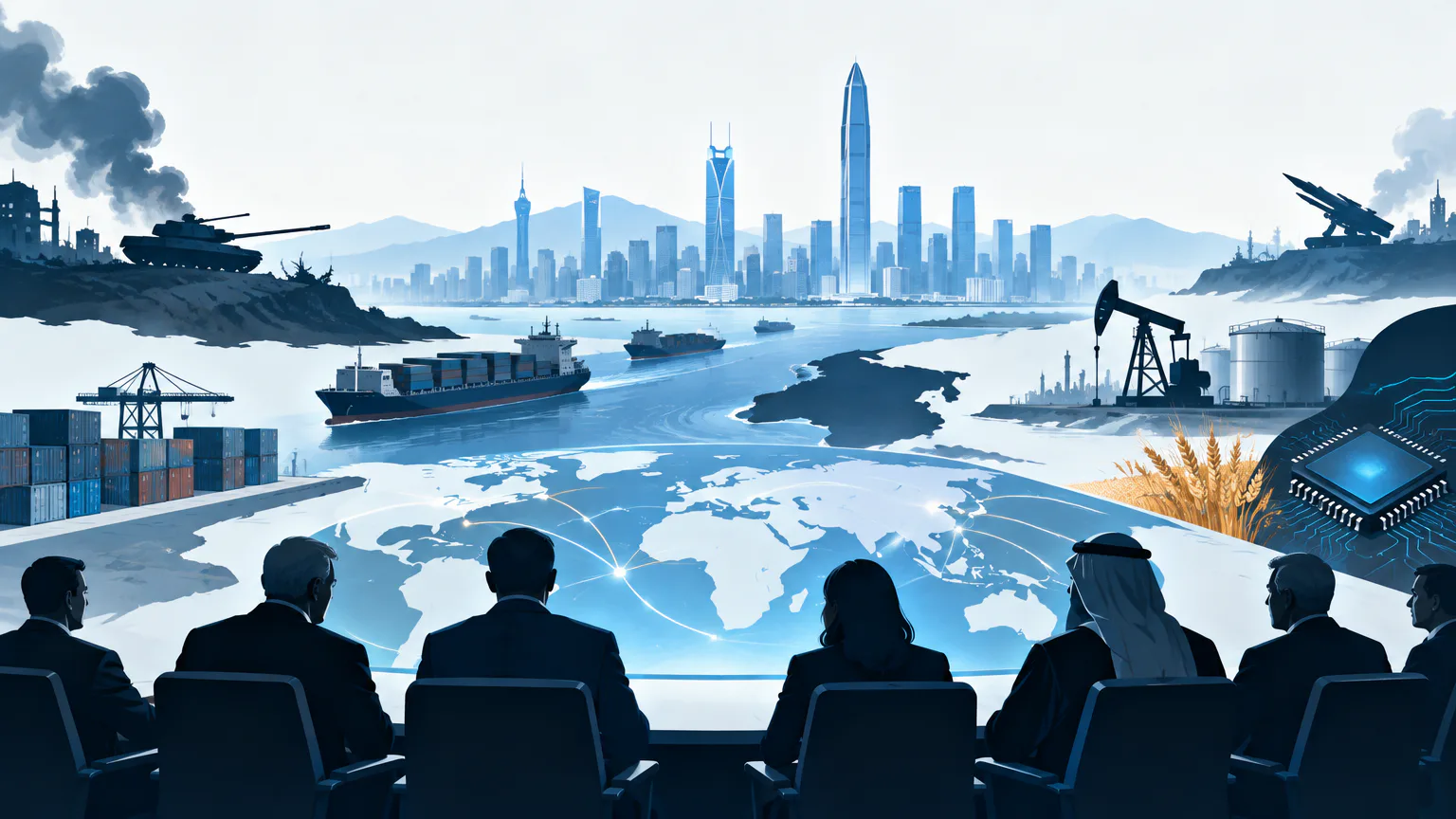
The writer argues that wars are no longer confined to battlefields, but have extended to maritime corridors and supply, energy, food and technology chains, from the Russian-Ukrainian war to confrontations in the Gulf, Hormuz and the Red Sea. He reads the Shenzhen summit as an atte…
Wars are no longer measured by what happens on battlefields alone; the Russian-Ukrainian war has gone beyond the frontlines to Europe's security, energy and food, and the American-Israeli-Iranian confrontation has gone beyond military calculations to the Gulf, the Strait of Hormuz and the Red Sea, while militias have turned maritime corridors and supply chains into pressure cards that exceed their size and borders.
And when fire extends to the port, the oil tanker, the AI chip, and the food and medicine ship; war no longer remains a local affair, but becomes a danger threatening the stability of the entire world. As Clausewitz said: "War is not merely a political act, but a real political instrument; a continuation of politics by other means."
This is the lens through which the Shenzhen summit should be read. It is not a passing economic gathering, nor a protocol meeting between rival powers; but an attempt to catch up with a moment in which wars intersect with corridors, politics with economics, and chips with sovereign decision-making. At its core, it is a negotiation over the world's security before competition turns into total asphyxiation.
China's talk of integration, trade liberalization, and stable supply chains is not far removed from the fear of the world splitting into closed blocs. Trump's talk of artificial intelligence unchoked by regulations is inseparable from the race over chips and computing capabilities, where technology has become an economic, military and cognitive power all at once. Putin's talk of Russian logistics infrastructure is not merely an invitation to transport, but a display of alternative routes in a world that fears remaining hostage to a single corridor or a single decision.
Here Montesquieu's wisdom holds true: "Peace is the natural effect of trade." Trade does not create perfect peace, but it raises the cost of war, and reveals that blockading corridors or tampering with supply chains harms not only the adversary, but rebounds on the world's economies and peoples.
At the heart of this equation stands the Middle East; not as a transit geography, but as a daily test of the world's security. Hormuz, Bab al-Mandab, the Red Sea and the Suez Canal are not names on a map, but arteries of energy, trade and food. Alternative routes will not weaken the region's standing, unless its people lag behind in connecting their ports, roads, railways and markets within an integrated system capable of turning geographic location into an economic and sovereign power rather than a dormant advantage.
Yet the greatest danger does not lie in the competition of major powers; competition is one of the laws of politics. The danger is that every disagreement turns into a penalty, every technology into a siege, every sea into a field of blackmail, and every armed group into a capability to disrupt the world. Then the world becomes advanced in its tools, fragile in its arteries; rich in capabilities, poor in security.
This is why Hobbes's saying seems so relevant to the scene: "Covenants, being but words, have no strength to protect a person at all." Protecting navigation is not achieved by statements alone, but by an international will that deters those who threaten ships, and prevents making the security of trade, food and energy hostage to a gun that answers to no state or law.
The world does not need to halt innovation, nor to divide markets, nor to leave artificial intelligence without responsibility; it needs fair regulation that protects people from its risks without turning it into a tool of technological monopoly, safe diversification of corridors, and political dialogue that prevents wars from spreading into the economy and the digital space.
In the end, Kant summed up the essence of the dilemma: "Peace is not the natural state of humankind, but a state that must be established." The Shenzhen summit, if it wishes to go beyond the noise of declarations, is obligated to turn this truth into a practical program: protection of corridors, deterrence of militias, rules for competition, and space for cooperation before wars reach the world's arteries.