World Court Finds Myanmar Committed Genocide Against Rohingya
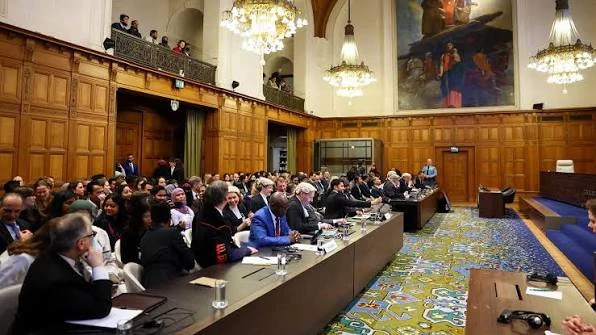
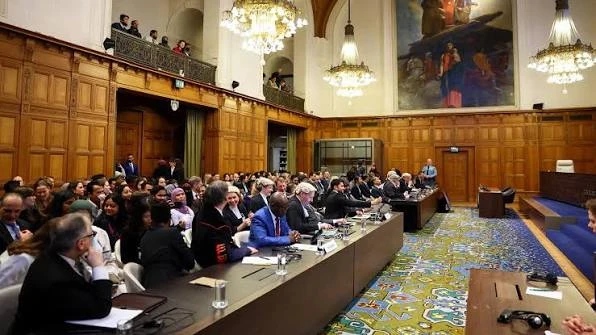
The International Court of Justice ruled yesterday (Thursday) that Myanmar committed genocide against the Muslim Rohingya minority in northern Rakhine State, in a landmark judgment that marks a victory for victims of the 2017 military crackdown that forced hundreds of thousands to flee to neighboring Bangladesh.
The court, based in The Hague, ordered the Myanmar authorities to allow the safe, voluntary and dignified return of Rohingya displaced by the violence and to facilitate their repatriation, alongside conducting investigations and prosecuting suspects implicated in acts of genocide, as a step toward determining the compensation owed to victims.
Evidence showed that around 10,000 Rohingya were violently killed during the clearance operations
Court President Yuji Iwasawa said Myanmar committed genocide against the Rohingya in northern Rakhine State, in violation of its obligations under the Convention on the Prevention and Punishment of the Crime of Genocide.
Over the course of three hours, Iwasawa reviewed evidence relating to violations committed by Myanmar forces during the 2017 crackdown, affirming that security forces killed thousands of Rohingya civilians, committed widespread acts of sexual violence and excessive violence against children, and attacked members of the minority as they attempted to flee en masse to Bangladesh.
He noted that the evidence confirmed estimates that around 10,000 Rohingya were violently killed during the clearance operations, explaining that the minority's villages were systematically destroyed and their inhabitants replaced with non-Rohingya.
The court concluded that the only reasonable inference from these practices was that Myanmar sought to destroy the group, which meets a core criterion for establishing the crime of genocide.
At the Cox's Bazar camp in Bangladesh, the world's largest refugee camp, hundreds of Rohingya followed the court session on a giant screen, and many broke down in tears after the ruling was announced.
Mohammed Osman, 20, who lost his parents and four siblings during the Myanmar army's campaign, said the ruling proved they had not been lying when they spoke of genocide.
The ruling increases international pressure on President Min Aung Hlaing, who commanded the army during the campaign
The ruling is set to increase international pressure on President Min Aung Hlaing, who led the army during the crackdown against the Rohingya before toppling the elected government led by Aung San Suu Kyi in a 2021 coup.
Hlaing assumed the civilian presidency earlier this year following tightly restricted elections, as he seeks international recognition and legitimacy — efforts that the court's ruling may complicate.
On the diplomatic front, Britain announced it would expel Myanmar's military attaché following the ruling, while UN Secretary-General Antonio Guterres called on the Myanmar authorities to allow Rohingya who fled the country to return to their homes.
UN High Commissioner for Human Rights Volker Turk described the decision as a turning point for the minority, while the United States said it was reviewing the ruling, stressing the importance of the correct interpretation of the Genocide Convention and avoiding the politicization of the court.
The European Union also stressed that the fate of the Rohingya must not be forgotten, affirming that the historic decision underscores the importance of achieving justice for the victims and respecting international law.
Gambian President Adama Barrow, whose country filed the case against Myanmar in 2019, described the ruling as a historic day for international justice.
International law experts are following the ruling closely, for the indications it may offer on how the International Court of Justice handles the other genocide cases before it, foremost among them the case brought by South Africa against Israel, accusing it of committing genocide against the Palestinians in the Gaza Strip.