King Salman Humanitarian Aid Center Launches Comprehensive Humanitarian Package in Yemen Covering Water, Food and Malaria Control
The King Salman Humanitarian Aid and Relief Center launched a campaign to distribute 500,000 mosquito nets to some one million displaced people in more than 629 camps in the liberated governorates, including malaria and dengue fever testing and treatment and entomological surveys, in cooperation with the World Health Organization and the National Malaria Control Program.
The King Salman Humanitarian Aid and Relief Center carried out an integrated humanitarian package in several Yemeni governorates, combining the provision of safe drinking water for displaced people, the distribution of food baskets, and the launch of a comprehensive health campaign to combat vector-borne diseases.
مياه الشرب في عدن
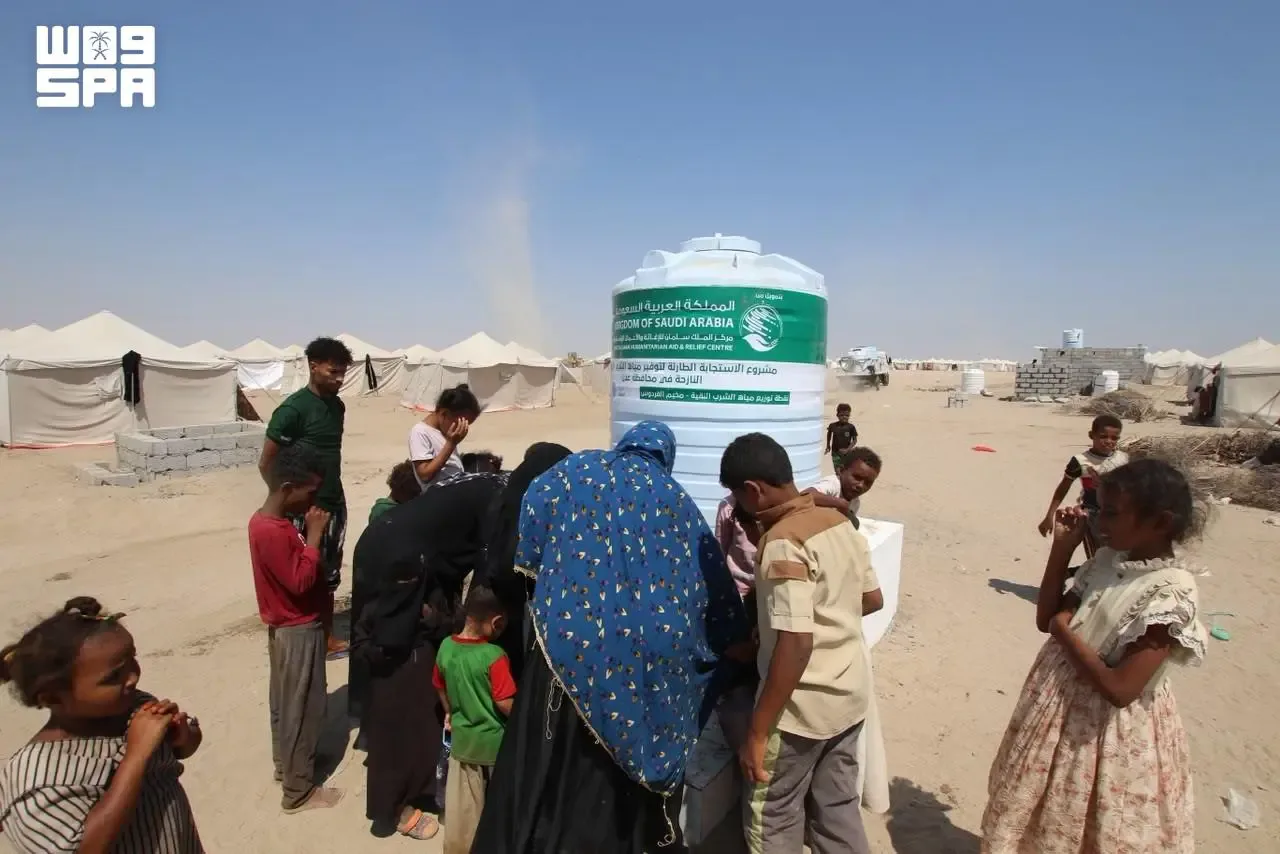
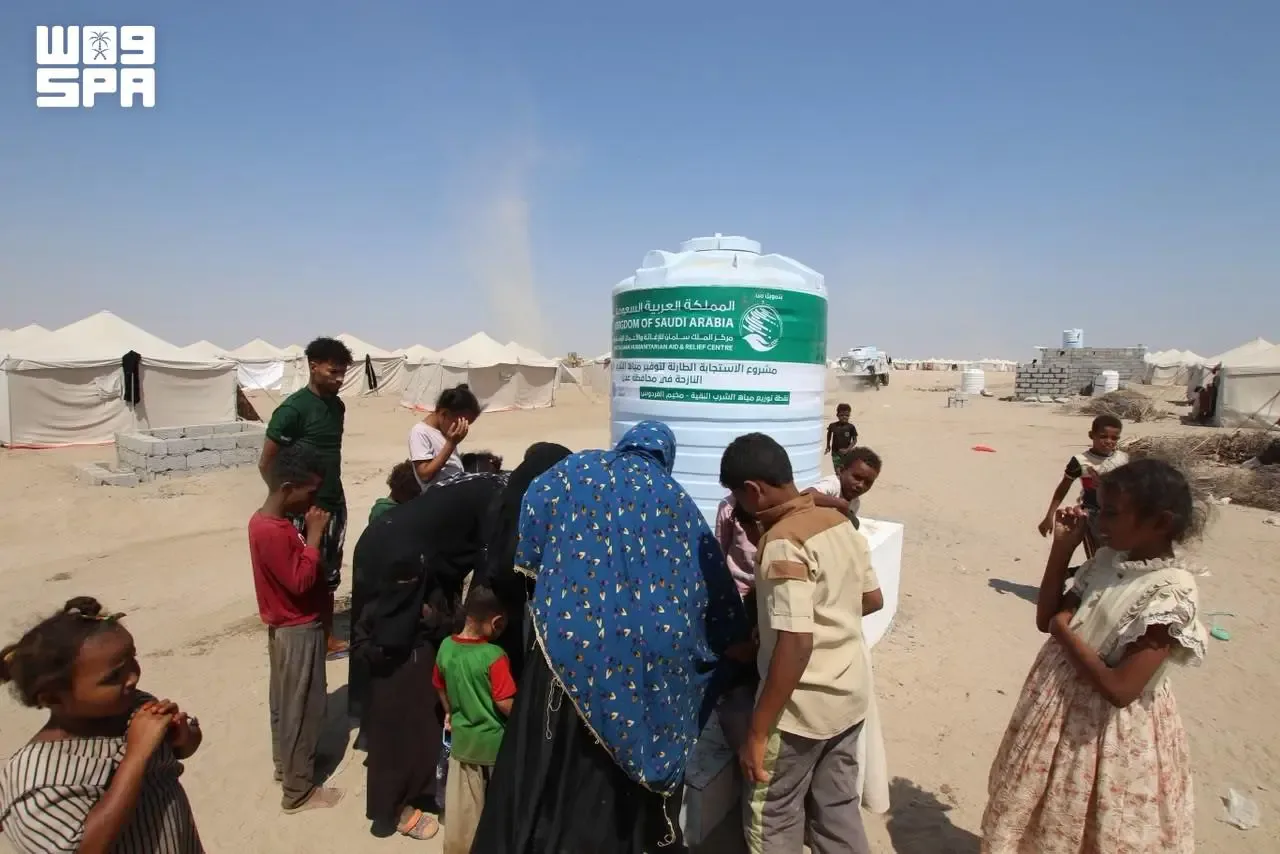
The center pumped safe drinking water through 10 distribution points in the Al-Fardous (2) camp in the Al-Bariqa district of Aden governorate, and provided 454 water storage containers, benefiting 361 displaced families, as part of the emergency response project to secure drinking water for displaced people in Aden.
مياه الشرب في تعز
In Taiz governorate, the center pumped safe drinking water through 13 distribution points in the Al-Mudhaffar district, benefiting 500 families, as part of the emergency response project to secure drinking water for displaced people in Taiz.
سلال غذائية في شبوة
The center distributed 1,250 food baskets to the most needy families in the Usaylan district of Shabwa governorate, benefiting 8,750 people, as part of the emergency response project in Yemen.
حملة مكافحة الملاريا وحمى الضنك
The center supported a wide-ranging campaign to distribute mosquito nets and carry out field health interventions in displacement camps, in cooperation with the World Health Organization and the National Program for Malaria and Vector-Borne Disease Control, as part of the malaria control project in Yemen.
The campaign aims to distribute 500,000 mosquito nets to around one million displaced people in more than 629 camps in the liberated governorates, with the goal of curbing the spread of vector-borne diseases and strengthening health prevention. Around 25,000 mosquito nets are allocated to Aden governorate alone, with priority given to the Al-Fardous camp and newly established displacement camps, with field teams to complete coverage of all camps in Aden within a week before moving on to the other governorates.
The Director General of the National Program for Malaria and Vector-Borne Disease Control, Dr. Yasser Abdullah Bahesham, said the campaign 'is not limited to distributing mosquito nets, but includes an integrated package of preventive, diagnostic and therapeutic interventions, to be carried out over six days by health teams and mobile medical clinics.'
Bahesham added that health teams would go into the displacement camps to conduct the necessary tests to detect malaria and dengue fever cases and provide treatment for those infected, alongside entomological surveys to determine vector density and breeding sites, helping to direct interventions according to the actual needs of each area.
These humanitarian projects come as part of the ongoing efforts by the Kingdom of Saudi Arabia, through the King Salman Humanitarian Aid and Relief Center, to strengthen the foundations of life, support the resilience of the population, create conditions conducive to recovery, and help protect the Yemeni people from epidemic diseases and improve their health and living conditions amid the ongoing humanitarian crisis.