'Sinking' Tankers With No Names or Wreck Sites: Maritime Facts Contradict IRGC Accounts in Hormuz
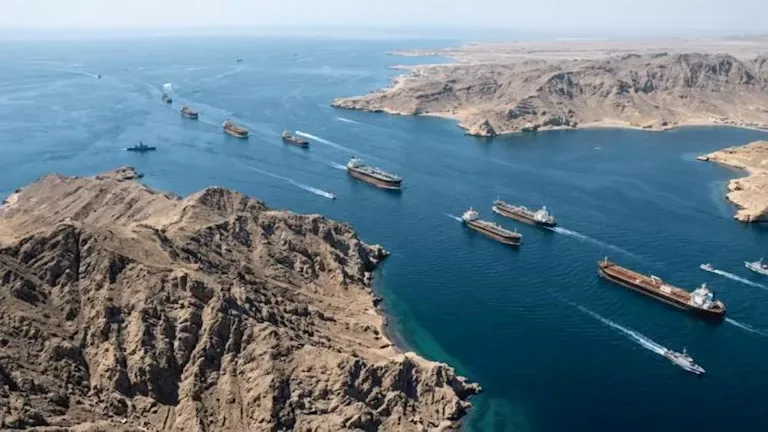
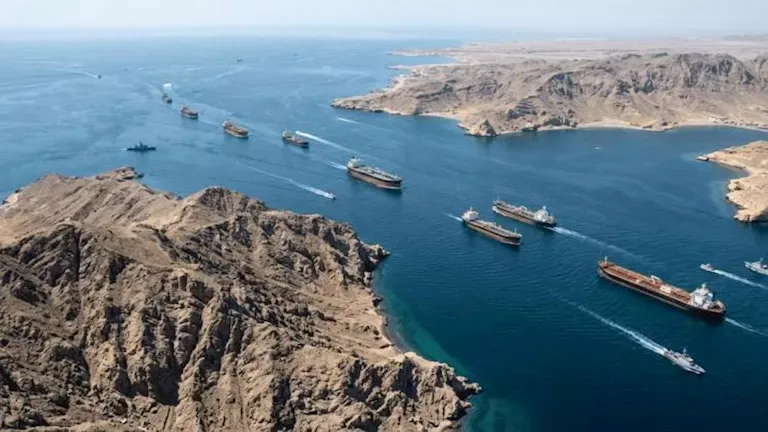
Iran's repeated announcements about oil tankers sinking and striking mines in the Strait of Hormuz raise questions about their accuracy, as official maritime bodies, including the Joint Maritime Information Center (JMIC) and the UK Maritime Trade Operations (UKMTO), have not confirmed sinking incidents on the scale announced by Tehran, while Iran has not revealed the ships' names or the locations of their wrecks. …
Iran's repeated statements about attacks on ships in and around the Strait of Hormuz are raising questions about their accuracy, after official maritime reports showed discrepancies in the descriptions of attacks that did take place, while claims that oil tankers sank in recent days still lack independent confirmation, according to a report by Asharq Bloomberg.
The most prominent of these announcements came on November 17, when Iran said four ships, including a giant oil tanker, caught fire, a day after Iran's Tasnim news agency, quoting the Revolutionary Guards, said six oil tankers had caught fire and sunk in the strait since November 15 after striking naval mines. The Revolutionary Guards claimed at the time that the tankers had tried to use the southern passage through which the United States secures the transit of ships, and that pollution from the explosions had spread into the strait's waters and along its coasts.
This followed an Iranian announcement that a giant tanker carrying more than 2 million barrels of crude oil had sunk after striking a mine and catching fire, without disclosing its name or wreck site, or clarifying whether it was among the total count later announced by the Revolutionary Guards.
Tehran also did not reveal the names of the six tankers allegedly to have sunk, their maritime identification numbers, or the locations of their wrecks, while available maritime reports have not confirmed sinking incidents on this scale.
What do maritime authorities say?
In a report issued on November 19, the Joint Maritime Information Center (JMIC) said Iran's claims about oil tankers striking naval mines had not been confirmed by any official body or national authority, documenting attacks on tankers in the strait in the preceding days, including ships hit by unidentified projectiles, without confirming sinking incidents on the scale announced by Iran.
Nor did UK Maritime Trade Operations (UKMTO) bulletins on the attacks recorded on November 15 and 16 include confirmation of any oil pollution, with the organization saying the environmental impact of these incidents was not yet clear.
UKMTO recorded a tanker being hit while exiting the Strait of Hormuz on November 16, causing a fire in the engine room, and on November 15 received a report from Indian maritime authorities about an attack on another tanker in Arabian Gulf waters before entering the strait, without confirming that either sank, or determining whether they were among the ships Iran said it had targeted.
The absence of independent confirmation does not necessarily mean other incidents did not occur, but the gap between the accounts takes on significance in light of previous episodes in which the Revolutionary Guards provided details about attacks that were later contradicted by official information.
Precedents contradicted by official reports
On September 14, the Revolutionary Guards announced that the Panamanian-flagged oil tanker EL GAIA had struck a naval mine while attempting to cross the Strait of Hormuz, causing a fire on board. But US Central Command (CENTCOM) denied that account, saying the tanker had been disabled by an Iranian missile strike in August and then came under a new attack by an Iranian drone during September while off the coast of Oman. An official Indian report also documented that it was hit by a projectile on September 13, causing a fire and the death of an Indian sailor.
In October, the Revolutionary Guards announced that a container ship had struck a naval mine while crossing an unauthorized passage in the strait, a day after the container ship GFS PRIDE came under an attack that later led to its sinking. However, Singapore's Maritime and Port Authority said the ship was hit by an unidentified projectile, while the Joint Maritime Information Center said the Revolutionary Guards' claim about a container ship striking a mine on October 14 was not supported by evidence.
The lack of evidence recurred on October 17, when the Revolutionary Guards announced that two giant tankers had struck mines in the strait, while the center, in a report issued the following day, confirmed there was no evidence supporting the claim, noting one attack recorded in the strait's vicinity in the previous 72 hours, targeting a tugboat with two unidentified projectiles.
On August 31, US Central Command, which also assists ships with transit, denied another Iranian claim that a tanker had struck two mines in the strait, days after Washington announced it had cleared mines from the international shipping lanes there.
'Dark transit' complicates verification
Verification of the conflicting accounts is made more difficult by the reliance of some ships transiting the Strait of Hormuz on what is known as 'dark transit,' switching off Automatic Identification System (AIS) devices, making their movements invisible on conventional tracking platforms.
In the seven days ending November 11, UK Maritime Trade Operations recorded 82 transits using AIS data, while its total reported transits reached 308, comprising 169 inbound journeys to the Gulf and 139 outbound, according to a tally combining AIS data with transit figures provided by US forces. The organization said the US data include ships that do not broadcast AIS signals, and that it cannot independently verify them at this stage.
However, the absence of tracking signals does not necessarily explain the lack of other evidence of giant tankers sinking, such as the ships' names, their wreck sites, the fate of their crews, or information that might be issued by their owners and operating companies.
Latest developments
In its latest update issued on November 22, the Joint Maritime Information Center reported that seven tankers had been hit in the Strait of Hormuz since November 16, noting three attacks within 72 hours targeting departing tankers hit by unidentified projectiles at a distance of between 8 and 17 nautical miles from Oman's Khasab on November 20 and 21, including the tankers TORKEL and ARINA, with no crew casualties recorded.
The center renewed its assertion that Iran's claims about tankers striking mines 'have not been confirmed by any official bodies or national authorities.'