Al-Samlaji Dam: A Historic Witness Among Taif's Mountains Tells the Story of Evolving Water Management
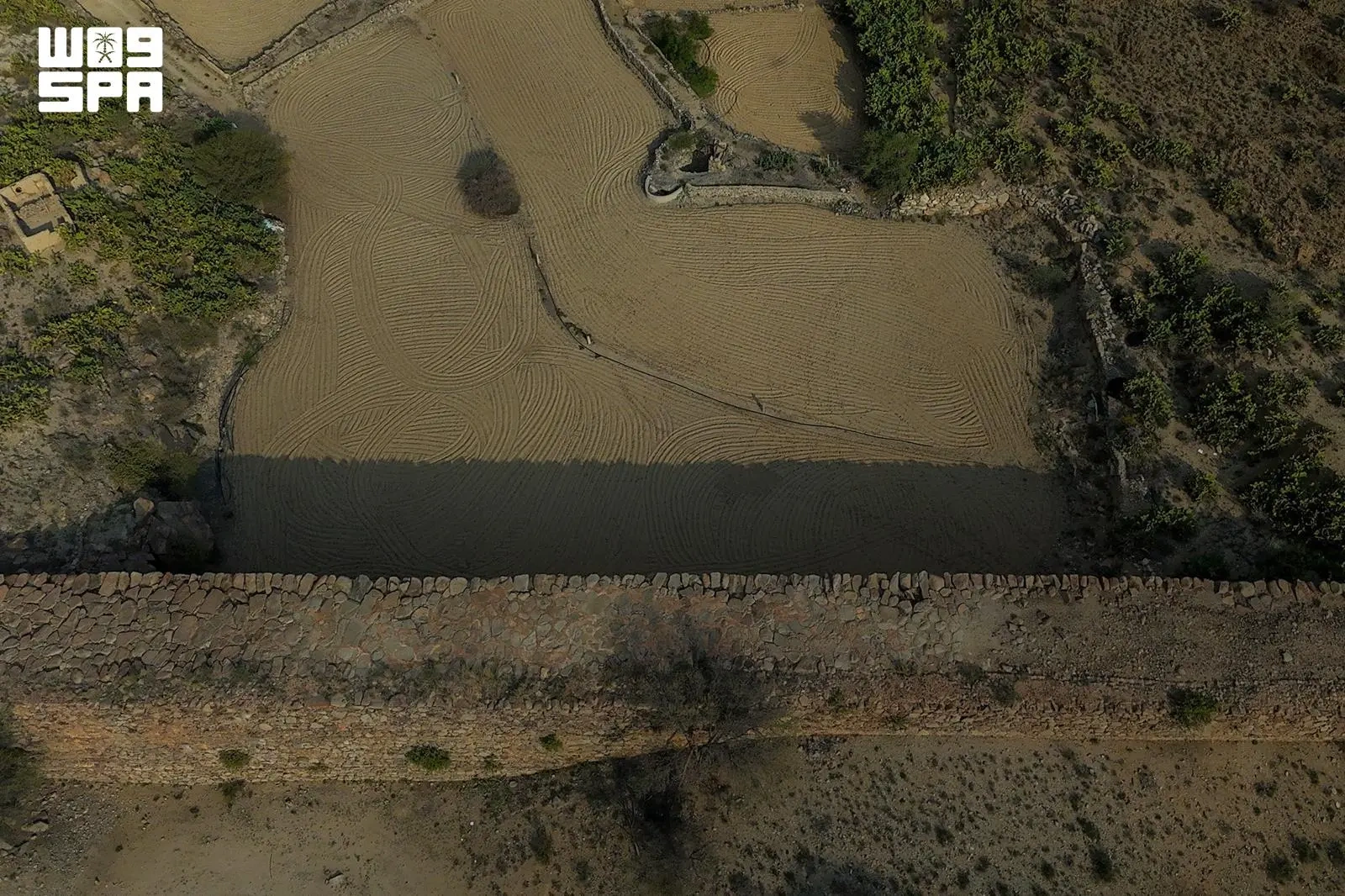
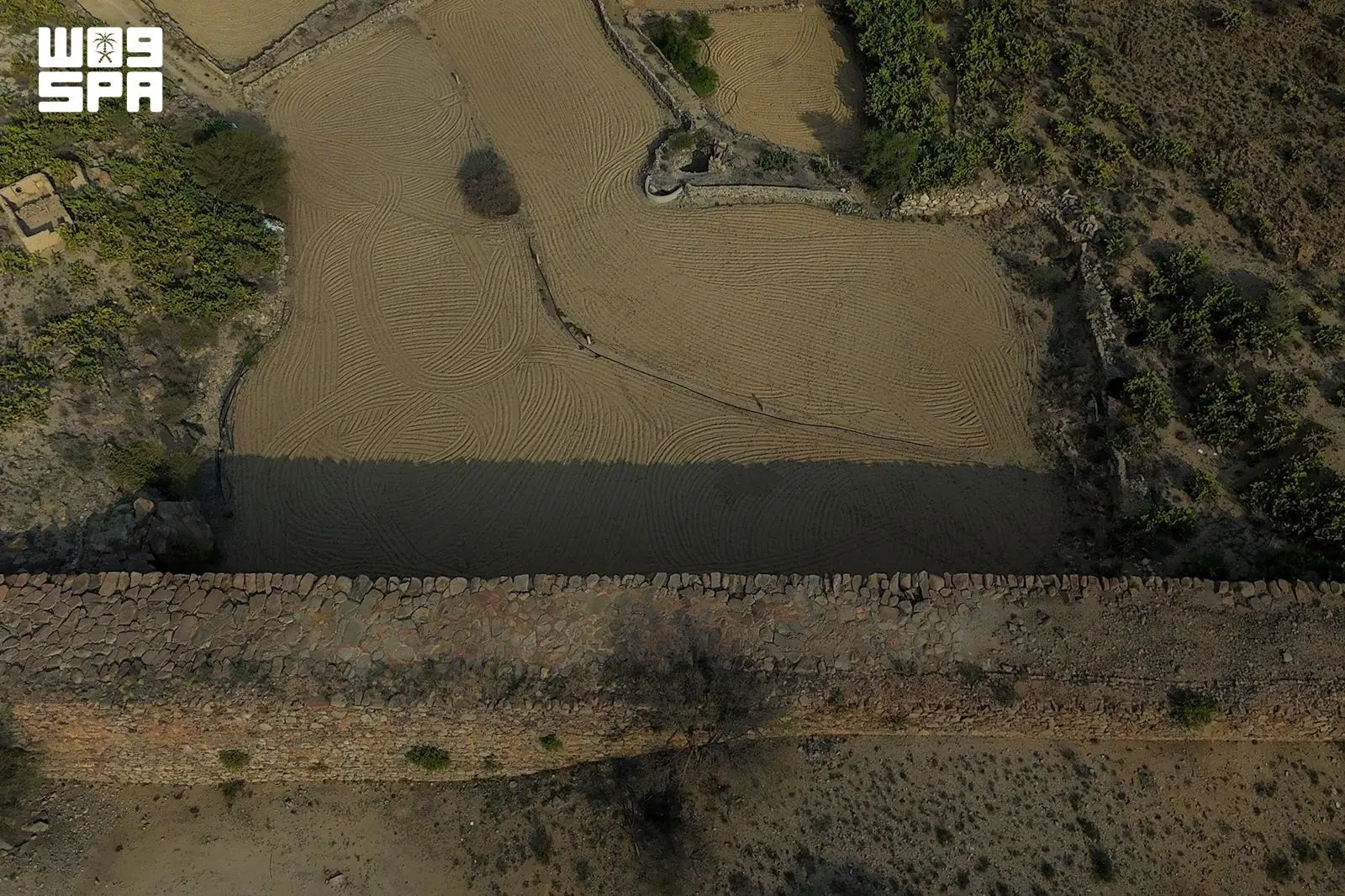
Along Wadi Thamala, south of Taif governorate, the remains of a massive stone structure stand between two mountain elevations, bearing witness to an ancient chapter in the history of human settlement in the region, when people realized that benefiting from rainwater was not limited to awaiting rainfall, but required building structures to store it and channel it toward agricultural land. The Samlaji Dam remains one of the most prominent testaments to the development of hydraulic engineering in the Arabian Peninsula.
In the villages of Thamala, some 30 kilometers from the city of Taif, the dam retains architectural features that reflect the ancient builders' knowledge of the nature of valleys and flood patterns. Its site was chosen at one of the narrowest points of the valley, between two mountains, allowing the natural terrain to be used to erect a stone barrier capable of collecting water and regulating its flow.
The dam extends more than 210 meters and was built with two parallel walls of large stone blocks, with the gap between them filled with small stones and rubble, along with a stepped facade and layers of waterproofing mortar, in a design that reveals an early understanding of the importance of pressure distribution and protecting structures from the force of floods.
The historical value of the Samlaji Dam lies not only in the enormity of its stones, but extends to the period in which it was built and used. Some archaeological studies suggest its origins may predate Islam, based on its architectural characteristics and the resemblance of some of its elements to ancient water structures in southern Arabia, while early Islamic inscriptions and evidence link the site to the Umayyad era, making the dating of its original construction a subject of ongoing archaeological research.
Historian Issa Al-Qusayr told SPA that the Samlaji Dam stands as a witness to the development of water management methods in Taif in ancient times, noting that its location between mountain elevations reflects knowledge of the nature of valleys and flood courses, and of how to harness them to support human settlement and agricultural activity.
Al-Qusayr added that the site's historical value is not limited to the dam as a water facility, but encompasses the surrounding archaeological remains and ancient inscriptions, whose study contributes to understanding the historical stages through which Wadi Thamala passed and the nature of the economic and social life associated with it. He noted that the rocks surrounding the dam bear ancient Arabic inscriptions in Kufic script, which constitute historical evidence of a human presence at the site during the early Islamic centuries and add a documentary dimension to its engineering significance, linking the structure to successive stages of the region's history.
He explained that the site's details were not merely a wall for holding back floods; it was connected to channels and historic wells, including a channel extending toward nearby wells, reflecting the integration of water collection, distribution, and use in agricultural activities that formed one of the foundations of life in the valley. He confirmed that near the dam lie the remains of the historic village of Munifa and the ruins of two watch and protection towers, giving the place urban dimensions that go beyond its water function and revealing the link between agricultural structures and ancient settlements and their daily needs. The site is surrounded by sidr and talh trees, while vineyards and fodder and vegetable farms extend across parts of the valley, so that the agricultural environment surrounding the dam remains an extension of a landscape shaped over different eras by abundant water and fertile soil.
The Samlaji Dam in Wadi Thamala encapsulates a long history of the relationship between people, water, and the land. Among its neatly arranged stones, its ancient inscriptions, and its surrounding farms, the story of a place emerges where floods were not merely a passing natural phenomenon, but a resource around which agricultural activities and urban structures arose, and whose remains live on in the memory and civilizational heritage of Taif.