Makkah Quran Museum Houses Two Rare Kufic Quran Pages from the Third Hijri Century
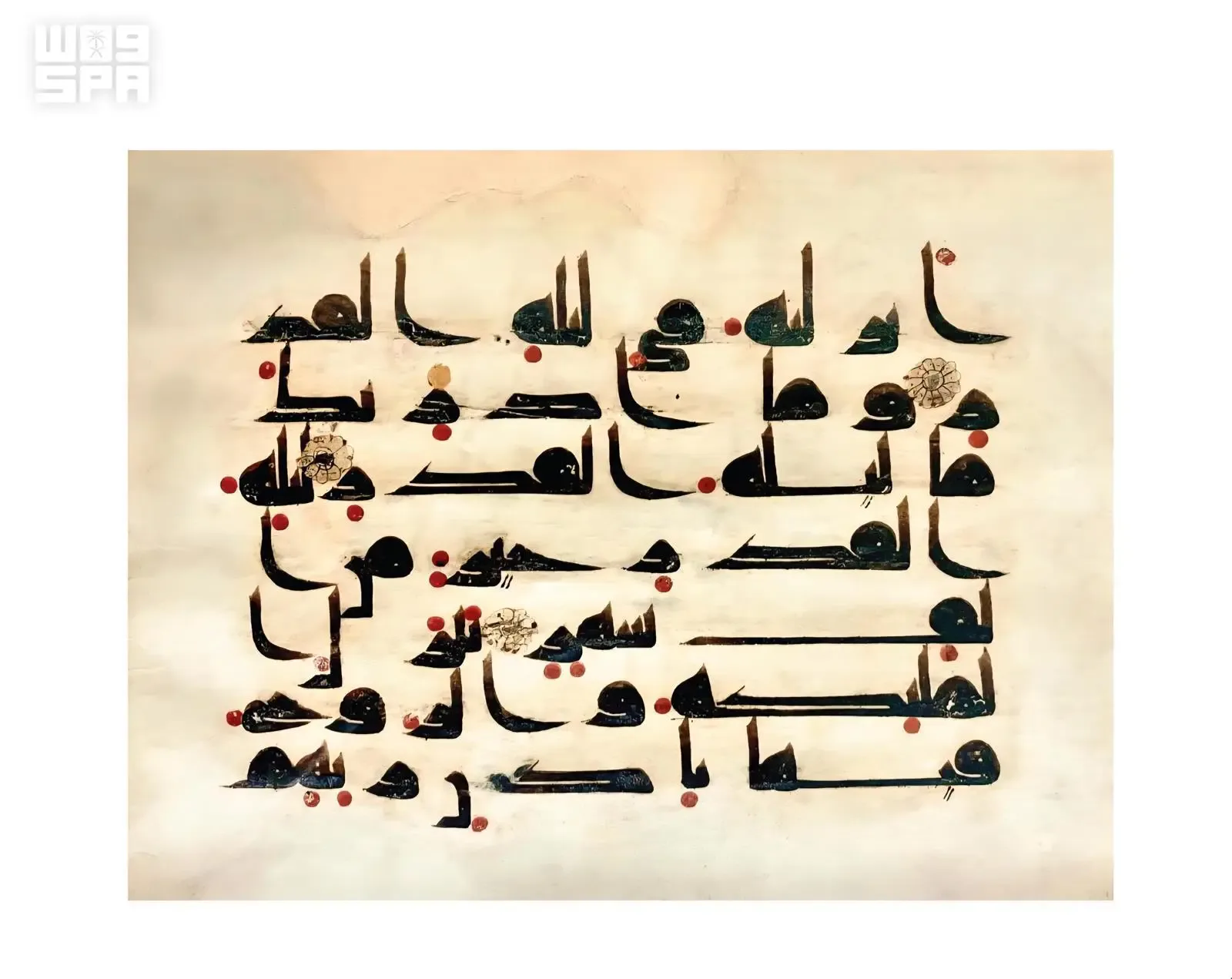
The Quran Museum in the Hira Cultural District in Makkah is displaying two ancient pages of a Quran written in Kufic script, dating back to the third century AH (ninth century CE). Each page contains seven lines in dark brown ink featuring verses from Surah Al-Qadr and Surah Al-Layl, interspersed with verse markers in gold. The two pages are distinguished by the slight slant of the alifs and lams toward...
The collections of the Quran Museum in the Hira Cultural District in Makkah include two ancient pages of a Quran written in Kufic script, dating back to the third century AH, corresponding to the ninth century CE. They represent a precious example of early Quranic writing and the level of care devoted to recording the verses of the Quran and showcasing the beauty of Arabic script in its earliest stages.
Each page contains seven lines written in dark brown ink, featuring verses from Surah Al-Qadr and Surah Al-Layl, with verse markers in gold interspersed throughout the text, in an arrangement reflecting the visual care that accompanied Quran transcription in that era and the keenness to highlight the points of separation between verses with distinctive artistic methods.
The Kufic Quranic script used in the two pages is characterized by the slight slant of the alifs and lams to the right, along with the absence of letter dotting—scriptural features reflecting the early characteristics of Kufic script in Quranic manuscripts and revealing stages in the development of Arabic writing and methods of standardizing the Quranic text.
Red dots used to indicate vowel marks appear according to a system based on the dot's position relative to the letter: the dot is placed above the letter to indicate the fatha, below it for the kasra, and to its left for the damma—a style reflecting one of the early methods of regulating the reading of the Quran before the establishment of the vowel-marking systems known later.
The significance of the two pages lies in their role as a historical testament to the development of Arabic script and the stages of the Quran's transcription, and as evidence of the early Muslims' care in standardizing the Quranic text in orthography and vocalization before Quranic manuscripts settled into their present-day forms. They allow visitors and researchers to contemplate the aesthetics of Kufic script and its artistic characteristics, and to appreciate the scholarly and artistic efforts expended over the centuries in the service of the Book of God, from dotting and vocalization to gilding and bookbinding.
The Quran Museum, located in the Hira Cultural District in Makkah, is one of the specialized cultural and educational landmarks dedicated to introducing the history of the Quran and its sciences, and highlighting the stages of its writing, compilation, and copying through the ages, through collections, manuscripts, historical Quranic copies, and interactive displays that enrich the visitor's experience and offer insight into the development of Quranic writing and the beauty of Arabic script.
The museum forms part of efforts to highlight the care devoted to the Quran, preserve Islamic heritage and make it accessible to visitors and researchers, and strengthen Makkah's standing as a cultural and civilizational destination housing historical artifacts documenting the status of the Quran in the hearts of Muslims across the centuries.