Finance Minister Tells Al-Mowatin: Saudi Privatization Strategy Is Highly Ambitious, We Are Working Continuously to Improve the Investor Journey
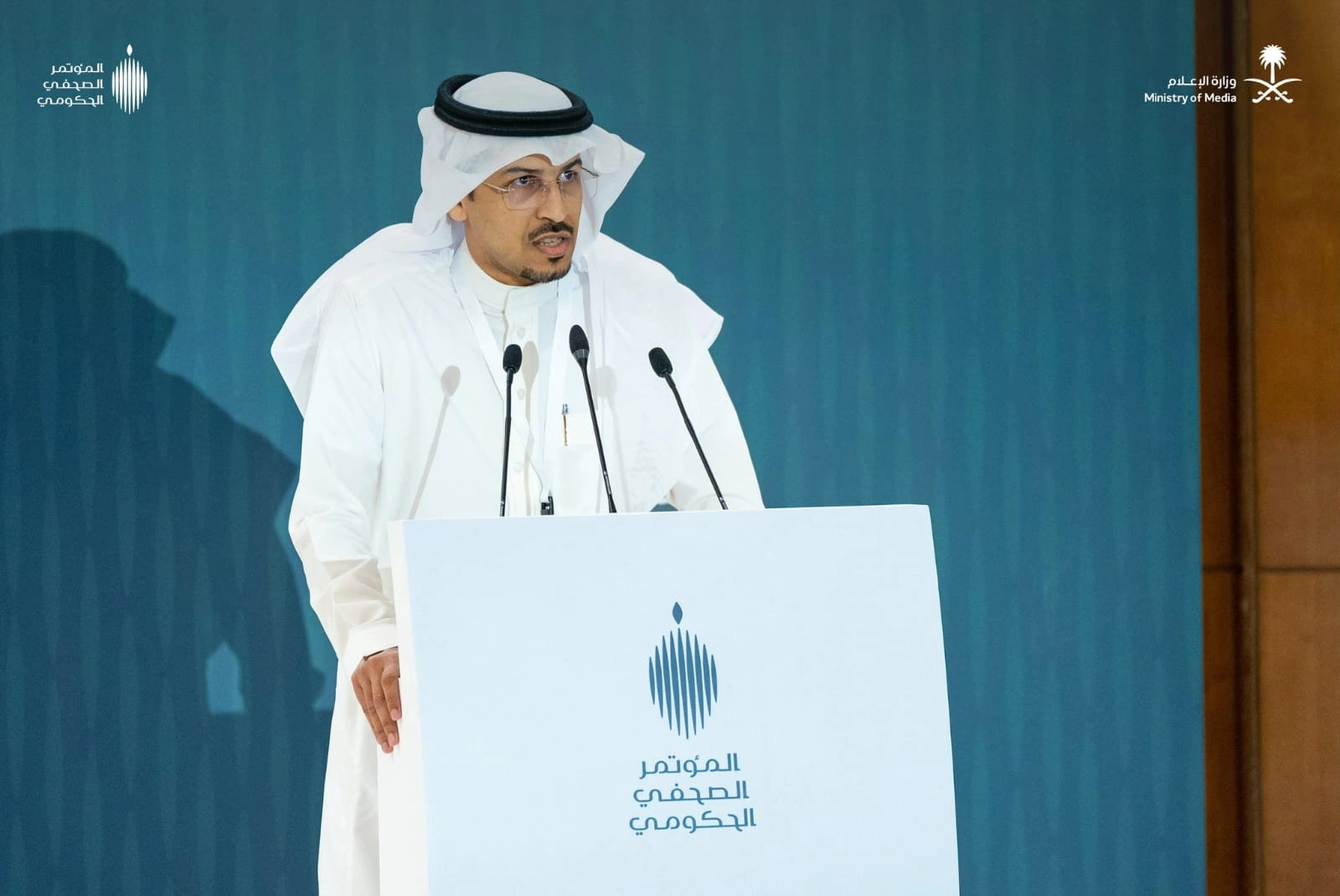
Minister of Finance Mohammed bin Abdullah Al-Jadaan affirmed that the privatization strategy in the Kingdom of Saudi Arabia is highly ambitious, and that the ministry is working continuously to improve the journey of investors, both domestic and foreign, in the Kingdom.
This came in response by the finance minister to a question from Al-Mowatin newspaper correspondent Dr. Mohammed Amer at the government press conference organized by the Ministry of Media today in Riyadh.
During the conference, Amer asked the finance minister: "Peace be upon you. Mohammed Amer from Al-Mowatin newspaper. At the start of this year, the announcement was made that the National Privatization Program had been halted and the transition made to the National Privatization Strategy. I would like you to talk to us about this transition, in addition to what viewers are keen to see in the coming period of reports and figures showing the numbers of entities and beneficiaries. Thank you."
A Highly Ambitious Privatization Strategy
The finance minister replied: "Two questions on privatization, a topic that seems to be of interest — I will try to cover both with you. The privatization programs were a foundational program that has concluded, and with its conclusion the privatization strategy was issued. This is a highly ambitious strategy. Let me give you two important figures; there are many details on the Privatization Center's website and on the Invest in Saudi Arabia website at the Ministry of Investment. From 2017 to today, approximately 200 privatization contracts have been signed, whether asset sales or public-private partnerships, valued at approximately 800 billion riyals. These are not small numbers; they support the private sector and improve the efficiency of government projects, whether in the construction or the operation phase."
Al-Jadaan added: "We are continuing with this. We currently have more than 202 projects, either tendered and under bid review, or still in the tendering and bid-receipt stage, across different sectors: water, health, electricity, environment, transport, real estate, and many other different sectors."
What Does the Domestic Investor Want Before the Foreign One?
The finance minister continued: "The second question in the economic story, my brother Mohammed: what does the domestic investor want before the foreign one? Personally, I would like to see investors without regard to nationality — I would like to see investors in the economy. But a foreign investor will not come to you if you do not convince the domestic investor. So that we do not focus too much of the discussion on the foreign investor and the level of foreign investment, speaking generally: major foreign investment will not come to you if you do not have domestic investment. Therefore, our initial focus on the domestic investor is followed by our focus on the foreign investor."
"The second point, which is a fundamental one: what does any investor need? As a foundation, the investor needs a return on investment that takes into account the risks of that investment. Quite simply, as long as you offer a return that takes the investment risks into account, the investor will come. Thank God, there is still growth — good growth — in the level of private investment in the Kingdom of Saudi Arabia through the third quarter of this year, despite all the challenges."
A Clear System That Protects Investments
Al-Jadaan went on: "The second point: I believe that in order for the investor to achieve that return on investment and to determine the return, he wants to be assured that there is a clear system that protects his investments and is capable of enforcement through the judiciary — a fair and swift judiciary, transparent regulations, and a government that is responsive to the private sector and does not surprise it with amendments without consultation, without soliciting public views, or without discussion with the affected sectors."
Al-Jadaan concluded: "Thank God, we have witnessed very major leaps at the government level in all these areas, and the process of improvement will not stop. We will continue to improve, but I see with far greater clarity than what we used to see the investor journey now, and we will continue, God willing, to improve. Thank you all."