Iraqi Intelligence Document Reveals Continued Kurdistan Oil Smuggling
A secret Iraqi intelligence document has revealed that crude oil continued to be loaded onto tanker trucks outside the government export system in Fishkhabour, Dohuk, according to satellite images up to November 15, while the smuggling monitoring committee had not yet reached the site as of the document's preparation.
An Iraqi intelligence document classified as "top secret" has revealed that crude oil loading operations onto tanker trucks continue outside the government export system in the Fishkhabour area of Dohuk province in Iraq's Kurdistan Region, despite the formation of a committee to monitor oil smuggling operations.
Satellite images attached to the document, titled "Follow-up Updates," showed oil loading operations continuing at various times of day and night until November 15, at a site belonging to a European oil company.
The images also showed a number of tanker trucks inside the site, which the document described as one of the most important crude oil loading sites outside the government export system.
The follow-up results indicated that the committee formed to monitor oil smuggling operations had not reached the site as of the date the document was prepared.
خلافات مالية وتعاقدية
These developments follow a technical intelligence report, the details of which Al Arabiya/Al Hadath revealed on November 11, which addressed networks suspected of involvement in smuggling Iraqi oil and re-exporting it via Iran and Turkey.
In further details, the 15-page report indicated that the Fishkhabour area in Dohuk province constitutes a major logistics hub on the smuggling route toward Turkey, and spoke of blending operations of petroleum products and manipulation of shipping documents.
The report also addressed the ongoing financial and contractual disputes related to the Norwegian company DNO, and its demand for guarantees for the payment of its overdue dues.
It stated that the company announced it was handing over the Kurdistan Regional Government's share, amounting to about 20% of its fields' production, to the federal government for export purposes, while it continues to sell its share of about 64% to local buyers within the region.
The report's authors considered that the continuation of these sales indicates that part of the oil production remains outside the federal export system until a comprehensive financial settlement is reached.
شبكات تهريب دولية
The intelligence report had earlier indicated that Iraqi oil smuggling operations had evolved from mere theft operations into an integrated international logistics system aimed at changing the origin of the smuggled oil and re-exporting it.
It also spoke of networks transporting oil and its derivatives from the Kirkuk and Sulaymaniyah fields to Iran, where refining and blending operations take place before the petroleum products are re-exported to Afghanistan.
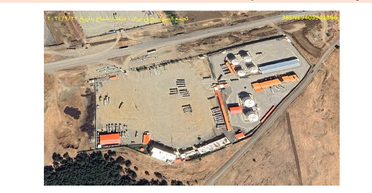
Photos from the intelligence report
The report recommended conducting a retrospective financial investigation to identify the beneficiaries and the extent of damage to Iraqi revenues, tightening control over tanker trucks, and ending sales operations outside the official marketing system.