Saudi Arabia Approves 2027 Budget With Projected Deficit Exceeding $50 Billion
Saudi Arabia approved its 2027 budget on Tuesday, projecting a deficit of 190.56 billion riyals ($50.8 billion), the finance ministry said, as the kingdom presses ahead with funding ambitious reforms to diversify its oil-dependent economy.
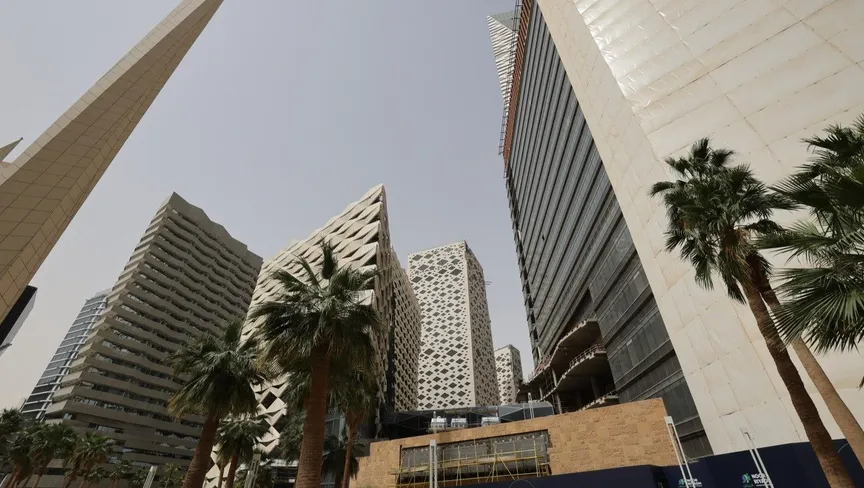
The announcement came as the Houthis in Yemen launched a new attack targeting the King Abdullah Financial District in Riyadh, striking the capital's tallest skyscraper, which houses the headquarters of the sovereign Public Investment Fund, for the second time in less than a week.
The Saudi Press Agency said the budget was approved during a cabinet session in Riyadh chaired by Crown Prince Mohammed bin Salman, the kingdom's de facto ruler.
Government spending for 2027 is estimated at about 1.39 trillion riyals ($370.6 billion), against expected revenues of 1.2 trillion riyals ($320 billion), resulting in a budget deficit of 190.56 billion riyals ($50.8 billion).
The projected deficit for next year represents a 22 percent decrease compared with revised estimates for the 2026 deficit of 245 billion riyals ($65.3 billion).
The projected deficit amounts to 3.6 percent of gross domestic product, down from the estimated deficit of around 245 billion riyals ($65.3 billion) in 2026, or 4.9 percent of GDP, according to the budget published by the finance ministry.
Before the war broke out, Saudi Arabia, the Middle East's largest economy, had been implementing a years-long sweeping reform plan known as "Vision 2030" aimed at reducing its reliance on oil revenues by pumping billions of dollars into projects designed to attract investment and tourists.
The Vision 2030 plan faced difficulties even before the war in the Middle East erupted in late February, with some massive, high-cost projects being scaled back.
The renewed confrontation with the Houthis in recent months has upended many of these plans.
The relentless attacks by the Iran-backed Houthis led to the cancellation of most major events scheduled in the kingdom this winter, including the Future Investment Initiative conference, sports tournaments, and film and music festivals.
– "A grave mistake" –
"We have proven time and again that we have enough resilience to withstand a long-running conflict," Saudi Finance Minister Mohammed al-Jadaan said at a press briefing attended by an AFP correspondent.
He added in English: "I would say that the illusion that Saudi Arabia can be blackmailed by targeting civilian assets with missiles into making concessions that compromise our national security is a grave mistake."
In recent weeks, the Houthis have stepped up their attacks on airports, energy facilities, military sites, and the kingdom's oil infrastructure. Saudi Arabia is the world's largest crude exporter.
An attack on King Khalid International Airport in Riyadh in October killed 14 people and injured hundreds, leading to a two-week suspension of flights.
In total, 26 people have been killed in Saudi Arabia in Houthi attacks since September, including 23 in attacks on Saudi airports, according to authorities in the kingdom.
In response to a question from AFP about the financial cost of the war, al-Jadaan did not give a specific figure, saying it was "extremely difficult to estimate."
Despite near-daily attacks by the Houthis, Riyadh raised military spending by only 2.1 percent to 263 billion riyals ($70.1 billion).
"We have already paid for and invested in advance in many of the systems we have today, and we have worked to develop local" military "industries," al-Jadaan said.
But he stressed that "there is no ceiling to what we can provide for our army if the need arises."