2027 Budget Forum: A Look at Spending Priorities and Development Prospects
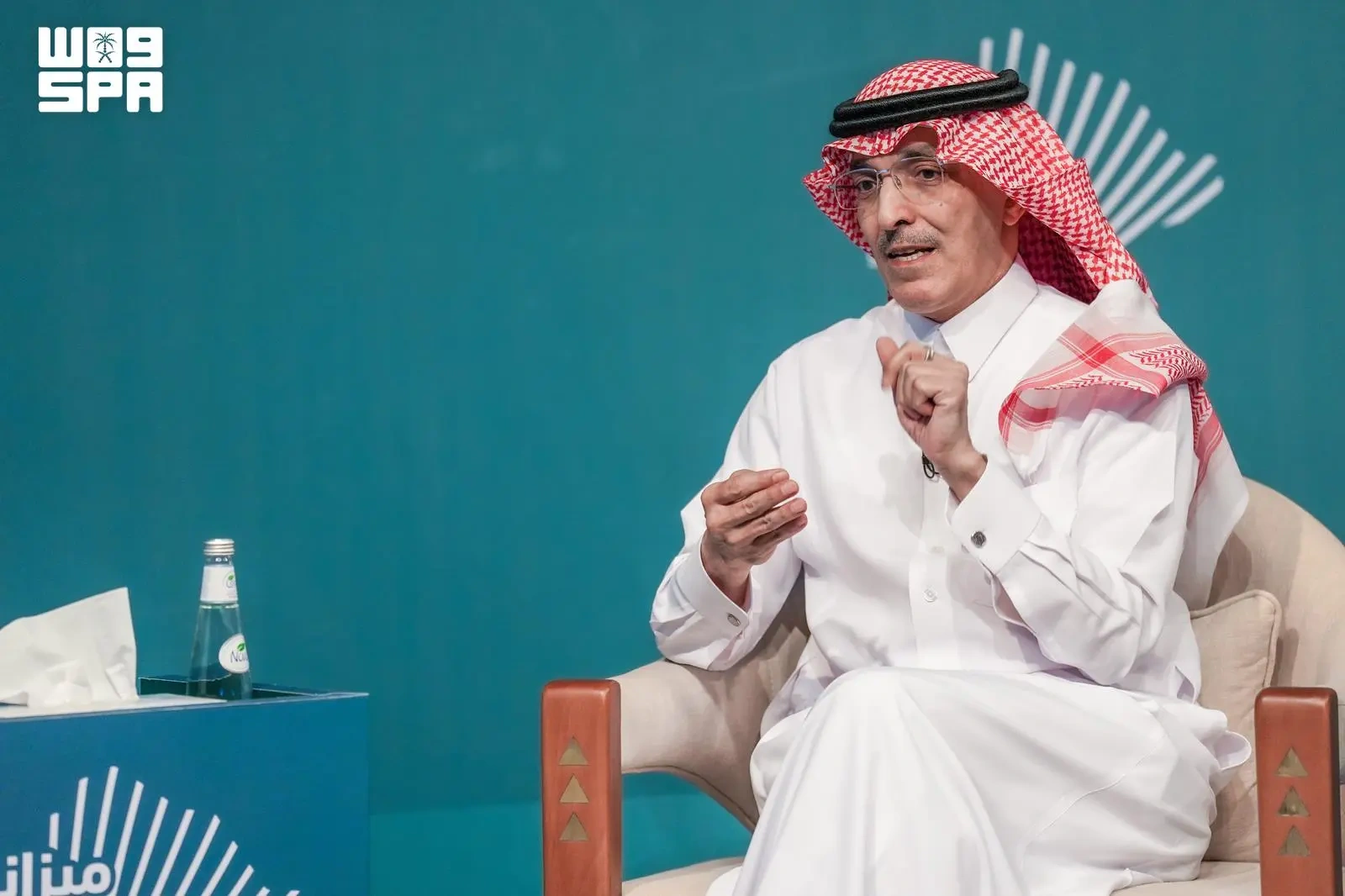
The Ministry of Finance concluded on Wednesday the proceedings of the 2027 Budget Forum, with the participation of a number of ministers, officials, and government entity leaders, to review the Kingdom's fiscal and economic trends, development priorities, investment opportunities in promising sectors, and the impact of government decisions on citizens' lives.
The forum, through two main dialogues and two panel sessions, addressed public finance resilience, logistics and technological capabilities, economic growth sustainability, and investment opportunities, alongside the presentation of four stories under the 'A Decision and Its Impact' segment, covering food and water security, investing in people, access to healthcare and improving the beneficiary experience, and real estate balance.
Minister of Finance Mohammed bin Abdullah Al-Jadaan stressed during the first dialogue, titled 'Public Finance Resilience,' that the development of institutional capabilities and investments in infrastructure have strengthened the Kingdom's ability to deal with challenges and changes, noting the continued growth of non-oil activities, consumption, and private investment despite regional and global conditions, and that providing basic services, improving quality of life, and creating job opportunities are at the top of the government's priorities.
He explained that the growth of non-oil revenues contributed to enhancing the stability of government spending and medium-term fiscal planning, and reducing exposure to oil revenue volatility, noting that the updated state revenue system aims to raise the efficiency of revenue management, clarify the responsibilities of entities in estimating and collecting revenues, and provide greater flexibility in dealing with the obligations of affected sectors.
He noted that deficit management takes into account the nature of spending and its expected economic and social returns compared to the cost of financing, affirming that there is no current need to use government reserves, given the diversification of revenues and the ability to access debt markets.
He pointed to the importance of supporting the private sector and ensuring it is not crowded out in local financing markets, and the complementary roles of the government, the Public Investment Fund, and the National Development Fund in empowering it, affirming financial readiness to meet the needs of the military and security sectors to protect the homeland, citizens, and residents.
In the 'A Decision and Its Impact' segment, Deputy Minister of Environment, Water and Agriculture Mansour bin Hilal Al-Mushaiti reviewed the impact of investment in food and water security, explaining that the Agricultural Development Fund provided loans worth 40 billion riyals over ten years, enabling the private sector to invest more than 60 billion riyals in agriculture, while local agricultural production rose from 6 million tonnes in 2015 to more than 13 million tonnes in 2025.
He noted that consumption of non-renewable groundwater fell by more than 40% over the same period, and that more than 247 billion riyals were pumped into upgrading water services over ten years, affirming the importance of partnership with the private sector, localizing technology and knowledge, and preserving resources in achieving sustainability.
In the first panel session, titled 'Logistics and Technological Capabilities Connecting the World,' Minister of Communications and Information Technology Abdullah bin Amer Al-Swaha stressed that investment in people and digital infrastructure strengthened the Kingdom's readiness and the continuity of services and business, noting that the Kingdom ranked first globally in digital government services and reached the target of being among the top five countries in the overall index four years ahead of schedule.
He explained that the next phase involves deploying AI agents to deliver more integrated and proactive government services, reviewing models of technology deployment in the energy, justice, health, and financial services sectors, and the role of national programs in empowering technology companies and entrepreneurs to compete locally and internationally.
For his part, Minister of Transport and Logistic Services Saleh bin Nasser Al-Jasser stressed that proactive plans and integration between government entities and the private sector enabled the transport sector to keep trade and supply chains moving and deal flexibly with changes in shipping routes and operational needs, in parallel with the continued implementation of the National Transport and Logistics Strategy.
He explained that new investments committed in the sector this year reached 45 billion riyals as of the date of the forum, while the number of jobs in the sector's various segments reached about 780,000, nearly triple the number in 2019, pointing to the role of specialized academies and partnership with the private sector in qualifying national talent and aligning training with labor market needs.
In the 'Investing in People' story, Deputy Minister of Education Prof. Inas bint Suleiman Al-Issa reviewed examples of male and female students from across the Kingdom's regions continuing their education at global universities, explaining that the development of the education system includes investment in early childhood, talent development, expanding educational opportunities, and developing teachers' capabilities.
She noted that 70% of scholarship students are studying at the top 50 universities worldwide, and that students won more than 150 international awards and registered more than 30 patents this year, affirming the importance of the quality of educational opportunities and their alignment with national priorities in building the capabilities of the nation's sons and daughters.
During the second dialogue, titled 'A Sustainable Economy,' Minister of Economy and Planning Faisal bin Fadhil Al-Ibrahim stressed that diversifying sources of growth and income and boosting private sector participation contributed to raising the resilience of the national economy, explaining that non-oil activities continued to grow in the third quarter of 2026 by 1.9% according to preliminary estimates, despite the challenges witnessed in the region.
He noted that the number of Saudis working in the private sector increased by 190,000 over one year, affirming that the growth of private sector participation and competitiveness reflects on productivity, job quality, and local content.
He also explained that long-term planning, economic integration, and the strength of the domestic market are factors supporting investor confidence, alongside the opportunities available in infrastructure and various economic sectors.
In the story 'Access to Healthcare and the Beneficiary Experience,' Assistant Minister of Health for Health Services Dr. Mohammed bin Khaled Al-Abduali explained that the health system provided more than 109 million health services during 2026 and completed 116 health projects, including 15 new projects and 101 projects for developing and equipping facilities, while health coverage of population centers exceeded 97%.
He noted that the Saudi healthcare model enhances the integration of services, accelerates intervention, and facilitates access to care, pointing out that more than 11.5 million beneficiaries have benefited from the model, including its services, pathways, and early screening programs, and that beneficiary experience measurement results rose to 89%, the highest level since measurement began in 2017.
In the second panel session, titled 'Investment Opportunities in Promising Sectors,' Minister of Tourism Ahmed bin Aqil Al-Khateeb stressed that legislative and regulatory reforms, investment incentives, financing channels, and the development of national talent contributed to the tourism sector's growth and strengthened investor confidence, pointing to the role of the Tourism Development Fund and the air connectivity program in empowering investment and expanding access to destinations.
He explained that the number of tourists reached 123 million and tourism spending 304 billion riyals in 2025, with a target of reaching 150 million tourists and tourism spending of 550 billion riyals by 2030.
He added that investments in past years resulted in the operation of more than 500 hotels with more than 100,000 rooms across the Kingdom's regions, while an additional 200,000 hotel rooms are under construction, targeted for completion by 2030.
For his part, Minister of Investment Fahad bin Abdulilah Al-Saif stressed that the clarity of spending priorities, the continuation of reforms, and infrastructure integration support investors' ability to plan and expand, explaining that the volume of investments in the Kingdom exceeded 6 trillion riyals between 2021 and 2025, with domestic investments accounting for about 90% of that.
He noted that the volume of investment grew 6% in the first half of 2026 compared to the same period of the previous year, and that 76 deals worth 95 billion riyals were executed in various sectors this year, affirming the importance of facilitating the investor journey, making information and opportunities available, and enhancing integration between sectors and regions to convert opportunities into investments that contribute to diversifying the economy and generating jobs.
The 'A Decision and Its Impact' stories concluded with a review of real estate balance, where CEO of the Real Estate General Authority Abdullah bin Saud Al-Hammad explained that the integrated measures targeted stimulating land development, increasing supply, addressing the gap between supply and demand, and enhancing market stability, noting that the Riyadh market saw the entry of about 89,000 residential units during 2026 through October, an increase of 78% compared to what was previously supplied annually before the balance decisions.
He pointed out that more than 27 million square meters of land subject to the vacant land tax have entered into development, and the role of regulating the rental relationship and freezing the annual increase in rents in Riyadh for five years in enhancing the clarity of obligations for families and business owners, affirming that real estate balance is a continuing national path to expand housing options and stimulate development and investment with viability.
The 2027 Budget Forum comes as an extension of the Ministry of Finance's efforts to enhance transparency and communication regarding the Kingdom's fiscal and economic trends, highlight the integration of government efforts and the impact of decisions and initiatives on service quality and citizens' lives, support sustainable growth, and achieve the targets of Saudi Vision 2030.