With a Million Satellites in the Sky, SpaceX to Turn Earth's Orbit Into AI Data Centers
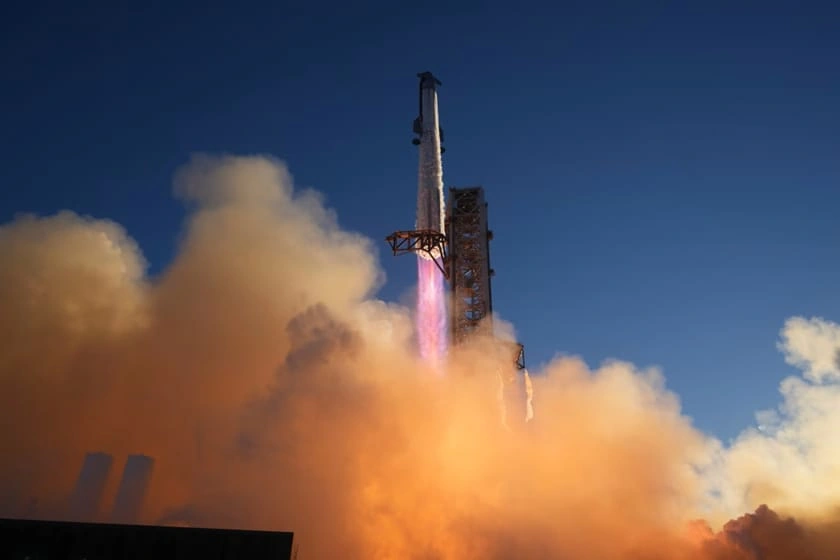
In a move that could reshape the future of artificial intelligence and digital infrastructure, the U.S. Federal Communications Commission (FCC) has approved SpaceX's request to launch up to a million satellites operating as orbital data centers, in a project called "Starmind," which aims to move advanced computing operations into space, harnessing solar power to meet the growing demand for running AI applications.
According to the Wall Street Journal, the approval gives Elon Musk a fresh boost toward his vision of building off-Earth computing infrastructure, after SpaceX merged with his AI company XAI, with data centers becoming a core part of the group's expansion, attracting major clients such as Google and Anthropic.
The Sun as an Alternative to Ground Power, and Space to Ease Bottlenecks
Proponents of the project argue that moving data centers into orbit could ease pressures on Earth, where AI facilities face mounting challenges related to electricity, water, and land, as well as community objections to building massive centers.
SpaceX is betting on solar power to run the satellites, and on optical links between satellites to transmit data, with the possibility of using radio-frequency wireless communications for emergency and control purposes. The company plans to begin launching computing units in the coming years, while regulatory deadlines for completing deployment of the system extend to 2040.
An Ambitious Project, but the Obstacles Remain
Despite the approval, the project still faces enormous technical and financial challenges, chief among them how to cool AI chips in space, where traditional cooling cannot be relied upon, as well as the cost of launching heavy equipment and the need to operate the Starship rocket efficiently to cut transport costs.
Astronomers' Concerns
The project has also drawn objections from Amazon, Viasat, and astronomical associations, due to the lack of clarity on some technical details, the potential for increased light pollution, impacts on astronomical observation, and risks of overcrowding the orbit with space debris.
SpaceX already operates more than 11,000 satellites in its Starlink network, but it is seeking to expand its activity from communications and rocket launches into computing and artificial intelligence. The real challenge remains convincing investors that placing costly chips in orbit can become a profitable venture rather than merely an expensive futuristic vision.