New Rules Set for Granting Patents and Utility Certificates
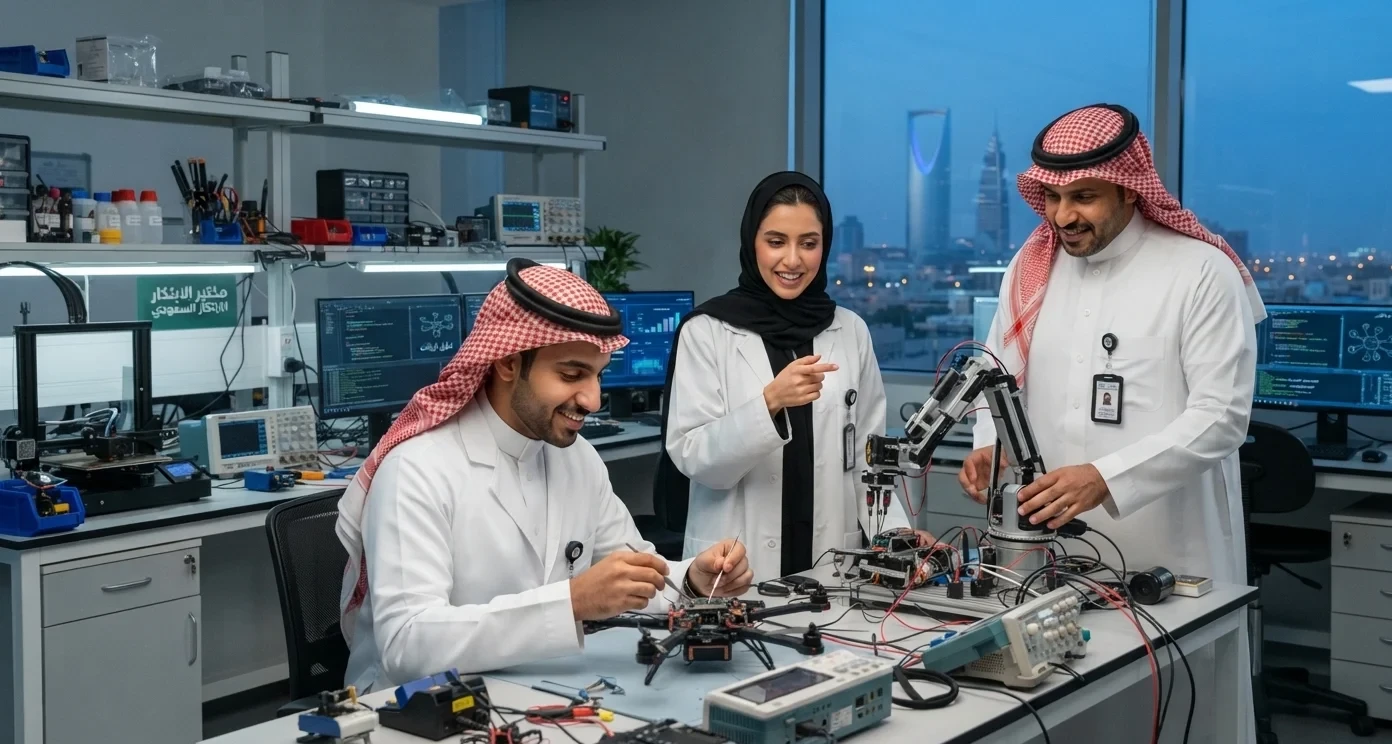
The Patents and Utility Models Law, recently approved by the Custodian of the Two Holy Mosques, King Salman bin Abdulaziz, sets out the conditions required to obtain patents, the rules for registering them, and the cases that are not considered patents.
The Patents and Utility Models Law aims to provide protection for inventions and models, encourage their registration and the transfer of technology, and enhance the competitiveness of the economy and national industries.
The Saudi Authority for Intellectual Property will receive and examine applications, issue protection documents, and record related transactions. The law is set to take effect 180 days after its publication in the official gazette, with the implementing regulations to be issued within the same period. The law also requires that patent applications related to national security be filed with the Authority before being submitted outside the Kingdom.
Conditions for Granting Patents and Utility Model Certificates
The law grants a patent for a new invention that involves an inventive step and is capable of industrial application; a utility model certificate is granted for a tangible functional improvement in the shape or structure of a device, tool, or their components that increases their utility or capability and is capable of industrial application.
An invention is considered new if it has not been disclosed to the public before the filing date or priority date of the application; disclosure by the inventor or his successor within the preceding year does not affect the novelty requirement. The inventive step is met when the invention is not obvious to a person having ordinary skill in the art.
Abstract ideas, scientific theories, mathematical methods, computer programs as such, algorithms, business schemes, mental activities, and games are not considered inventions; human cloning processes, new uses of known materials, and purely aesthetic improvements are also excluded.
A protection document shall not be granted if its commercial exploitation contravenes public order or public morals, or is harmful to life, human, animal, or plant health, or seriously harmful to the environment. A protection document shall also not be granted for methods of diagnosis, treatment, and surgery for treating humans or animals, and a utility model certificate shall not be granted for industrial processes, chemical inventions, pharmaceutical or herbal preparations, or biotechnology-related inventions.
Filing and Examination of the Application
The application for a protection document for an invention or utility model shall be submitted to the Authority in the form and according to the procedures specified in the regulations, including the applicant's and inventor's details, a clear and complete description of the invention or utility model, the claims, the abstract, and any drawings necessary for understanding and implementing the subject of the application.
The application must relate to a single invention or a group of interrelated inventions forming a single general inventive concept; the applicant may divide it, provided the divided application does not go beyond the scope of the original disclosure, while retaining its filing date or priority date if the conditions are met.
The Authority examines the application formally and grants the applicant a period to remedy any deficiencies, then publishes it, except for applications related to national security; interested parties may object before the application proceeds to substantive examination to verify novelty, inventive step, and industrial applicability.
The applicant benefits from the right of priority based on a prior application filed inside the Kingdom or in one of the Paris Convention countries or the World Trade Organization, provided the application is filed within the statutory period and is accompanied by the data and documents proving the prior application in accordance with the regulations' requirements.
The Authority receives international applications under the Patent Cooperation Treaty, and treats an international application designating the Kingdom as a national application once it enters the national phase; the examination, grant, and objection procedures are subject to the laws and regulations in force inside the Kingdom.
Ownership of the Protection Document by the Employer and the Worker's Reward
Ownership of the protection document belongs to the employer, unless the two parties agree otherwise, if the invention resulted from the worker performing an obligation based on devoting his efforts to accomplishing the work, or if he used the resources, means, or data made available by the employer.
The worker retains the right to a special reward determined by agreement between the two parties, or assessed by the court in case of disagreement according to the economic importance of the invention; any agreement depriving him of the reward is void, thereby balancing the employer's ownership and the innovative effort made by the worker.
National security applications are subject to confidentiality, and filing them outside the Kingdom requires the Authority's approval; if the competent authority determines that the subject is related to national security, the right to obtain the document transfers to it, with the inventor receiving fair compensation and having the right to resort to the court if he objects to the amount of compensation.
Duration of Protection and Annual Fees
Patent protection lasts 20 years from the application filing date, while the utility model certificate lasts 10 years; an annual fee is due on the application or protection document, and failure to pay it within the specified period causes the application or document to lapse, with that announced in the bulletin.
Payment of the annual fee may be deferred until the protection document is issued, with the Authority's approval, provided the applicant pays the amounts due for the deferral period; the application or document may also be restored if the non-payment resulted from circumstances beyond the holder's control.
The protection document is a private right of the person to whom it is granted, transferable with or without consideration, and also transferable by inheritance, provided the protection document includes the inventor's name even in the event of the right being transferred.
Owner's Rights and Forms of Infringement
The holder of a protection document has the right to prevent others from exploiting the invention or utility model without his consent, including manufacturing, selling, offering for sale, using, or importing the product; if the invention relates to an industrial process, the right extends to its use and the products directly resulting from it.
Anyone who assisted or encouraged the practice of any unlawful act of exploitation while knowing of it is considered an accomplice to the infringement; if the document relates to a process for producing a new product, the defendant may be required to prove that the identical product was not made using the protected process.
If a person other than the applicant or the holder of the protection document claims that the subject of protection in the application or document belongs to him, he may request the competent court to transfer the application or ownership of the document to him; if his right is established, the Authority must transfer the application or ownership of the document to him. The claim shall not be heard after 5 years from the grant date, unless bad faith on the part of the document holder is proven.
Uses Exempt from Protection
The law permits use of the invention without the owner's consent for scientific experiments, education, and scientific research, and for purely personal use; it also permits use of a protected medicine in research necessary for evaluating a pharmaceutical product or health technologies, and generating the information required to obtain marketing authorization.
The exceptions include a pharmacist preparing a medicine for an individual necessary case based on a prescription when it is unavailable, and use of the subject of protection in means of transport entering the Kingdom temporarily or incidentally; provided the use is limited to the needs of the means of transport and does not harm the owner's rights.
The holder of a protection document may dedicate it to the public domain, enabling any person, without permission or any obligation to pay consideration to the holder, to benefit from or exploit it, based on a written request submitted to the Authority. One or more independent claims of the granted claims may be waived. The protection document may not be dedicated during a compulsory or contractual license except with the written consent of the licensee, or proof that compelling circumstances justified the dedication. The dedication is recorded with the Authority and announced in the bulletin, and has no effect vis-à-vis third parties except from the date of publication.
Licensing, Appeals, and Penalties
The law permits contractual licensing, meaning a contract under which the holder of a protection document grants another party some or all of his rights to exploit the protection document.
It also allows the grant of a compulsory license after 3 years from the grant of the document in cases of non-exploitation or insufficient exploitation; provided there has been a prior attempt to obtain a contractual license, and the owner receives fair compensation.
The concerned party may appeal a decision rejecting or dismissing the application before the appeals committee within 60 days of being notified, then challenge the committee's decision before the competent court within 60 days; the appeal does not stay execution of the decision unless the competent authority decides otherwise.
The law affirms that the right holder may file a lawsuit before the competent court against any person infringing the protection document, and may request that the court order the infringer to cease the infringement, seize the infringing products and the tools, materials, and equipment predominantly used in the infringement, or destroy the infringing products, or dispose of, outside commercial channels, the tools, materials, and equipment predominantly used in the infringement, if the court finds it more likely than not that keeping them would likely result in continued infringement, or claim compensation for damages suffered as a result of the infringement.
Instead of ordering the destruction of infringing products, the court may order their disposal outside commercial channels if their destruction would cause serious harm to public health or the environment.
3 Offenses Carry Fines and Imprisonment
The law stipulates that anyone who places false data leading others to believe he has obtained a protection document or a license to exploit it, or violates the provisions on filing national security-related applications and their confidentiality as specified in the law, or submits forged documents or false information to the Authority to obtain a protection document, shall be punished with a fine of no less than 100,000 riyals and no more than 1 million riyals, or imprisonment for no more than two years, or both.
The maximum penalty is doubled in cases of recidivism; anyone who commits the crime again during the execution of the penalty or within the three years following its execution or its expiry under a pardon is considered a recidivist.
The judgment convicting a person of these crimes and imposing the penalty may include the publication of its summary, provided the publication takes place after the judgment becomes final, and the Authority publishes the summary of the final judgment in the medium it deems appropriate.