Waymo Cars Fail on Highways and Blow Past Police Patrols
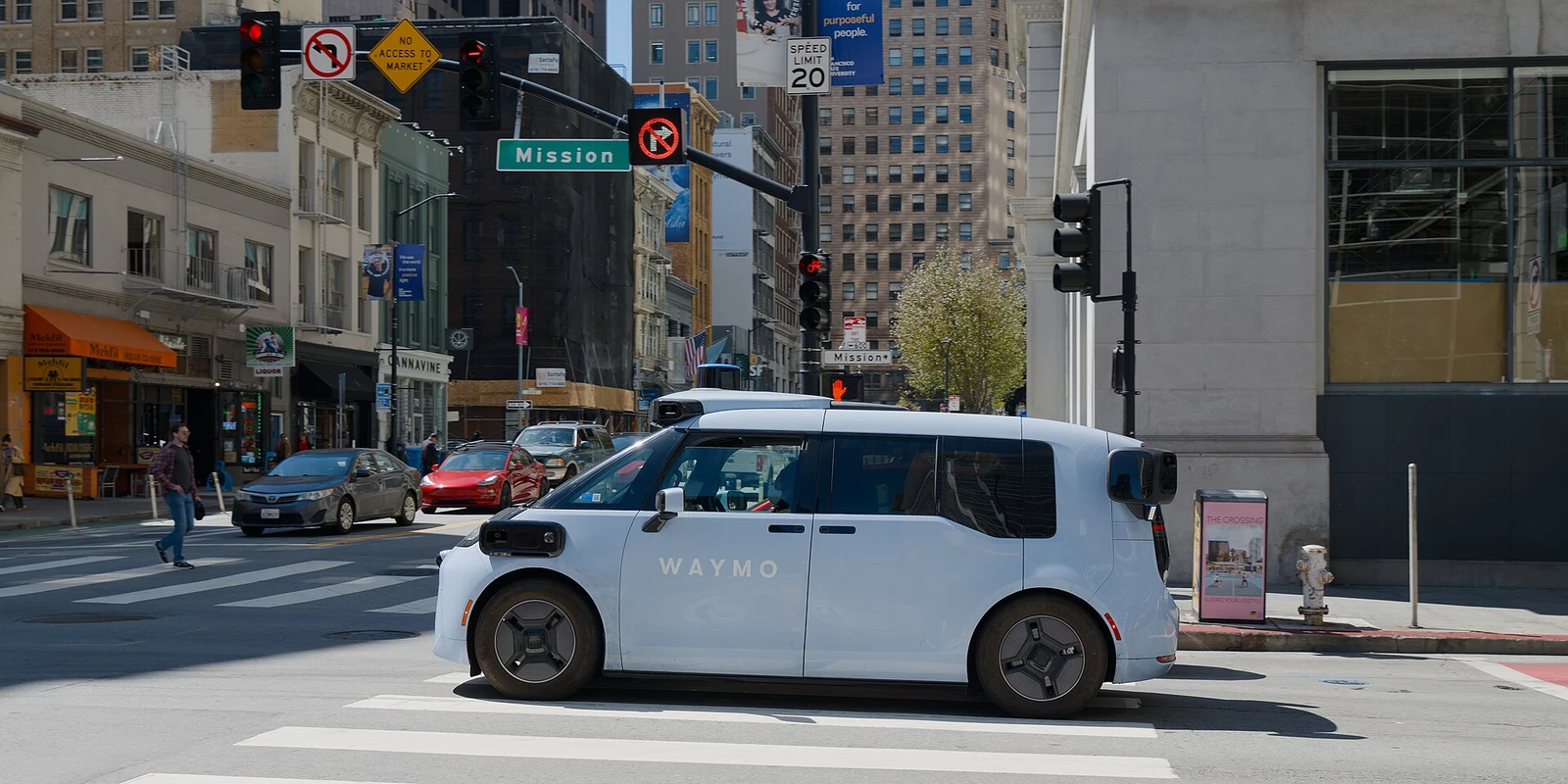
Waymo's self-driving cars have succeeded in navigating American cities, but they have not achieved the same success on highways and roads closed for maintenance work.
The car committed traffic violations and entered restricted areas despite warnings
U.S. authorities recorded 11 cases in which these cars entered lanes closed for maintenance work, and they also committed traffic violations, as video footage showed a Waymo robotaxi attempting to pass two California Highway Patrol cruisers during a traffic stop — a serious traffic violation that could cost any human driver their license.
For Waymo, the incident was merely the latest in a series of missteps on highways, which ended last week with the California Department of Motor Vehicles banning the company's vehicles from all highways in the state.
The challenges did not stop there, but extended to construction zones; a recall notice the company recently filed revealed 11 incidents in October and November 2026 in which its vehicles failed to recognize that a highway lane was closed for maintenance and drove into restricted areas despite warnings.
As these violations piled up, Waymo decided last week to suspend its commercial highway rides across all U.S. markets. The decision marked a harsh setback for the world leader in autonomous driving, revealing how easily its multibillion-dollar technology can stumble over the simplest traffic rules.
The company suspended its rides temporarily after its cars entered active work zones
This was not the first time the company was forced to suspend highway operations or was caught barging into construction sites. Earlier this year, it temporarily halted rides after its cars entered active work zones in Arizona and California, and issued a recall of 4,500 of its vehicles in June before gradually resuming operations in late July after updating its systems.
Philip Koopman, an autonomous vehicle safety expert at Carnegie Mellon University, said the company has not fixed the flaw in its car but is content with temporary solutions. He noted that the company issued another recall related to an accident at an intersection, where the vehicle failed to detect a traffic officer manually directing traffic: the car initially obeyed the officer's signals, but as soon as passing vehicles blocked its line of sight, its software lost track of the 'stop' command and proceeded into the intersection on its own. The company later updated its entire fleet so the vehicles would remember manual traffic signals even if the officer is temporarily out of view.
He added that these cars had passed stopped school buses and driven through flooded roads, meaning that instead of fixing the perception and logical reasoning shortcomings in its systems, the company resorts to a 'dynamic geofence' to avoid known flood zones, or relies on real-time GPS tracking data of school buses — which leaves the car helpless as soon as it encounters a situation not pre-listed on the map.
Since its launch, Waymo has habitually avoided highways in favor of longer local routes, drawing passenger complaints about trip duration. But in late 2025 the company declared it was ready to take on highways — though recent developments suggest Waymo may have jumped the gun.
Expert attributes the car's failures to the company's shift to comprehensive machine learning systems
Its two setbacks within a single year reflect the enormous risks of driving autonomously at high speeds. While slamming on the brakes is enough to salvage any confusion at 10 to 25 mph in cities, where the odds of death are low, stopping distances double at 60 or 70 mph, making any mistake near a maintenance worker or a stranded driver on the roadside nearly 100% fatal. The vehicle's recourse to remote operator assistance when confused also runs into the obstacle of communication response time, turning momentary delay into grave danger.
Koopman attributes Waymo's struggles in delicate exceptional cases to the company's recent shift to comprehensive machine learning systems. Unlike older rule-based systems that allowed engineers to write explicit rules, statistical models struggle when familiar elements appear in unfamiliar contexts.
He stressed that mastering highway driving is an existential necessity for Waymo if it wants to expand its services to vital destinations such as airports. Koopman believes engineers strive to deliver their best, but executives labor under enormous market pressures that push them to launch 'temporarily acceptable' solutions and apologize later, stressing that regulators need to impose mandatory public transparency rather than settling for silent software updates.