New Protection Supports Plant Variety Innovation and Grants Compensation to Its Owner
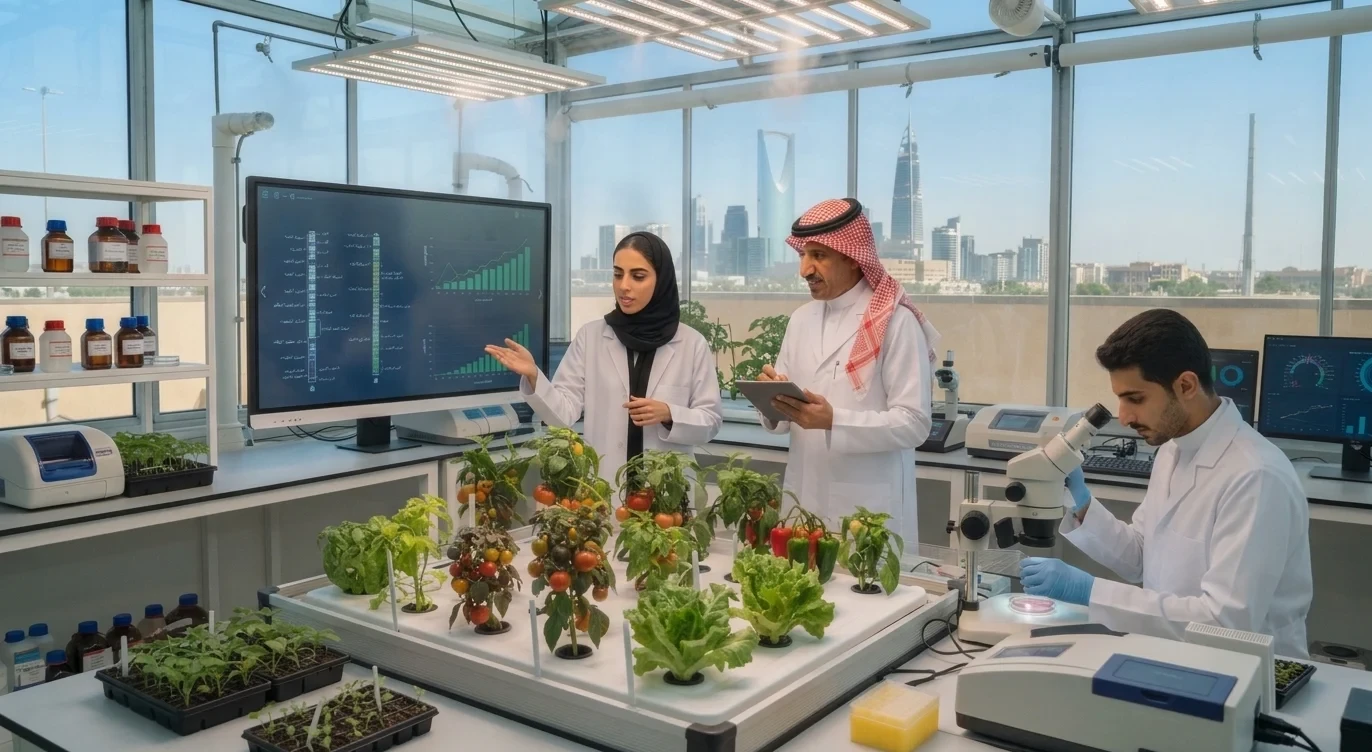
The new Plant Varieties Law establishes independent protection for newly developed varieties and the rights of plant breeders and holders of plant patents, aiming to encourage agricultural innovation, support sustainable agricultural development, and enhance the competitiveness of the economy and national industries linked to seed and propagation material production.
The law is part of a package of intellectual property regulations approved by the Council of Ministers and issued under Royal Decree No. M/124, replacing previous provisions, while existing applications and documents remain in force, and fees are subject to the national framework for fees and financial charges.
The Saudi Authority for Intellectual Property will receive, examine, publish, and grant plant patent applications. Its board of directors will issue the implementing regulations within 180 days of the law's publication in the official gazette, and the law will take effect after 180 days, without prejudice to international agreements in force in the Kingdom.
Conditions for Granting a Plant Patent
The law requires, for a patent to be granted, that the plant variety be new, distinct, uniform, and stable, with a proposed denomination that meets the criteria. A variety is considered distinct if it can be clearly distinguished from any other variety that is publicly known at the time the application is filed.
A variety is considered new if its plant material or harvest products have not been sold or otherwise disposed of for commercial exploitation purposes inside the Kingdom for more than one year before the filing date, or outside the Kingdom for more than 4 years, with the period rising to 6 years for trees and vines.
Uniformity is achieved when the variety's essential characteristics are sufficiently similar, taking into account the variations expected from its propagation method, while stability is achieved if its essential characteristics remain unchanged after successive propagation cycles or at the end of each propagation cycle.
A plant patent shall not be granted if its commercial exploitation contravenes public order, is harmful to life, human, animal, or plant health, or causes serious harm to the environment.
Ban on Choosing a Misleading Denomination or One Contravening Public Order
A patent application includes the breeder's name and the applicant's name, the proposed denomination of the variety, its genus, species, and trade or common name, plus a summary, a technical questionnaire, and photographs and drawings where needed. The data must allow the variety to be described and distinguished from other varieties.
The denomination must enable the variety to be identified and distinguished, and must not consist solely of numbers unless this is customary in naming the species. It is prohibited to choose a denomination that is misleading, contravenes public order, or is identical to the denomination of an existing variety of the same species.
The applicant is given 60 days to remedy deficiencies after being notified of them, failing which the application is deemed not to have been filed. The applicant may benefit from the right of priority based on an earlier application, provided the application is filed within the specified period and the details of the earlier filing are evidenced.
Examination, Publication, and Opposition Rules
The Authority conducts a formal examination of the application to verify that the data and requirements are complete and the fee paid, then publishes it in the bulletin to allow opposition. It then conducts a substantive and technical examination to confirm that the variety meets the requirements for granting a patent, which include distinctness, uniformity, stability, and the suitability of the denomination.
The Authority may request additional information, documents, or plant samples, or make use of the results of tests conducted by an accredited entity inside or outside the Kingdom. The applicant bears the costs of the examination and necessary tests in accordance with the rules specified in the regulations.
The Authority announces its acceptance to grant the patent once the requirements are met, then issues the document after the opposition period expires and the fee is paid. If the application does not meet the conditions, the applicant is given an opportunity to submit observations before a reasoned rejection decision is issued.
Patent Ownership and the Worker's Rights
Ownership of the plant patent belongs to the employer if the worker bred the variety in the course of performing his job duties or using the capabilities, means, and data provided by the employer, unless the two parties agree in writing on a different ownership arrangement.
The worker is entitled to a special award determined by agreement or assessed by the court in light of the economic importance of the variety. Any provision depriving him of this right is void, ensuring fair compensation for his effort in breeding the new plant variety.
Duration of Protection and the Owner's Obligations
Plant patent protection lasts 20 years from the date of grant, rising to 25 years for trees and vines. An annual fee is payable on it, and the patent lapses if it is not paid within the specified periods, though it may be reinstated if the lapse occurred due to circumstances beyond the owner's control.
The patent owner must maintain the variety or its genetic components throughout the protection period and provide the Authority with the information, documents, and samples necessary to verify that its characteristics persist. The patent may be revoked if it is impossible to prove that the variety's uniformity and stability have been maintained.
The law affirms that the plant patent is a private right of its holder, transferable for consideration or without it, and also transferable by inheritance, provided the plant patent includes the breeder's name even in the event of transfer of the right.
The plant patent owner may dedicate it to the public domain, enabling any person—without permission or any obligation to pay compensation to its owner—to benefit from or exploit it, based on a written application submitted to the Authority. Dedication of the plant patent shall not be accepted in the case of a compulsory or contractual license except with the written consent of the licensee, or proof of force majeure circumstances justifying the dedication. The dedication is recorded with the Authority and announced in the bulletin, and takes effect vis-à-vis third parties only from the date of publication.
Owner's Rights and Exceptions
Producing, propagating, conditioning, offering for sale, selling, exporting, importing, or stocking propagation material of the variety requires the patent owner's consent. Protection extends to harvest material and certain products made directly from it when obtained without his consent.
The law specifies acts that may be performed without the plant patent owner's consent or compensation, including producing propagation material of the protected variety, propagating it, conditioning it for propagation purposes, or stocking it for those purposes, for conducting scientific experiments or for scientific research purposes related to the subject of the plant patent, or producing propagation material of the protected variety, propagating it, conditioning it for propagation purposes, or stocking it for those purposes, for personal, non-commercial purposes.
The acts also include breeding new plant varieties based on the protected variety, and commercial or consumer activities involving crop material, raw and intermediate materials, and end products manufactured or extracted from crop material directly or indirectly, whether the crop material consists of a whole plant or a part of it.
Farmers may also, within reasonable limits and for their personal use, use harvest material obtained through cultivating the protected variety or a derived variety.
Conditions for a Compulsory License
A compulsory license may be granted after 3 years from the grant of the patent if the variety has not been exploited, or if its exploitation is insufficient to meet market needs. The license must serve the public interest, and the owner must receive fair compensation according to the economic value of the license.
A compulsory license means the Authority's authorization for others to exploit the plant patent without the plant patent owner's consent, in accordance with the provisions of the law.
Producing, propagating, exporting, importing, marketing, or stocking propagation material of the protected variety without the owner's consent constitutes infringement. Infringement includes varieties that are essentially derived and varieties that cannot be clearly distinguished from the protected variety.
Compensation, Penalties, and Appeals
The patent owner has the right to seek cessation of any infringement of his rights, the seizure and destruction of infringing materials and equipment, and compensation for damages. The court may also take urgent interim measures to prevent continued infringement or to preserve evidence and materials in dispute.
Anyone who places incorrect data on the plant variety leading to the belief that it has obtained a plant patent or a license to exploit it, or who submits forged documents or false information to the Authority in order to obtain a plant patent, shall be punished by a fine of no less than 100,000 riyals and no more than 1 million riyals, imprisonment for no more than two years, or both.
The maximum penalty is doubled in the event of recidivism. Anyone who commits the crime again during the period of execution of the penalty, or within the three years following its execution or expiration through a pardon, is considered a recidivist.
Decisions of the Authority may be appealed before the Grievances Committee within 60 days of notification, and then challenged before the competent court within 60 days of the committee's decision. The court may also rule the patent invalid if it is proven that it does not meet the conditions for protection.