Ozone hole records seventh-largest seasonal area in 48 years despite recovery signs
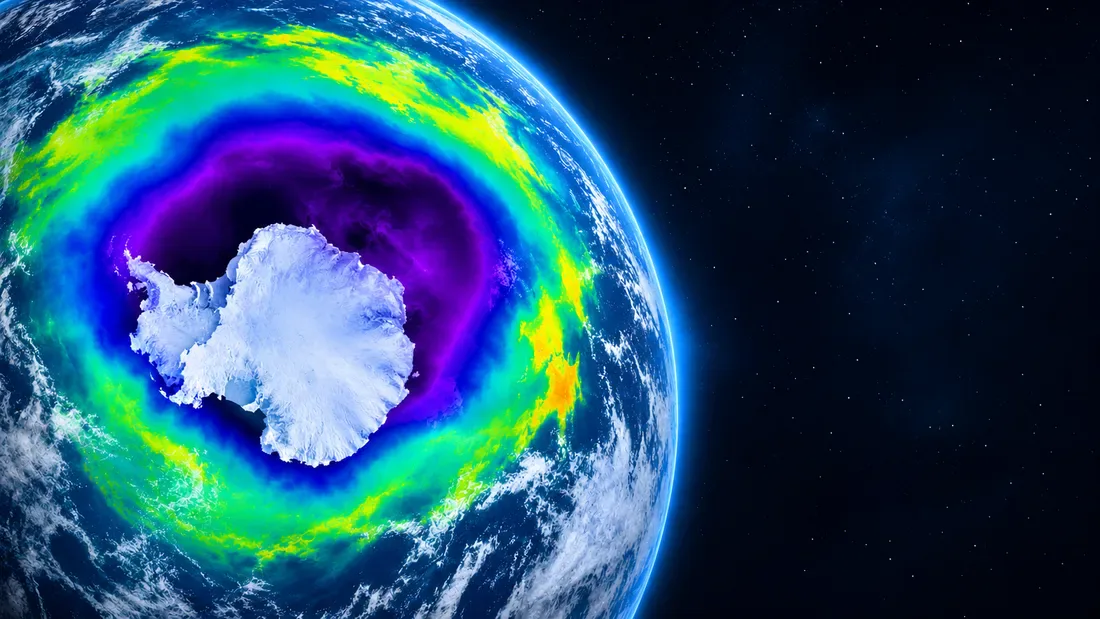
The ozone hole over Antarctica recorded its seventh-largest seasonal average area since monitoring began in 2026, at about 25 million square kilometers, due to a strong polar vortex. Long-term measurements confirm the layer's continued recovery, with projections for a return to 1980 levels by the 2060s.
The ozone hole over Antarctica recorded its seventh-largest seasonal average area in 2026 since monitoring began 48 years ago, despite continued scientific indicators of long-term recovery of the ozone layer.
According to NASA and the U.S. National Oceanic and Atmospheric Administration, the hole's expansion this year is due to a strong polar vortex, which kept temperatures in the upper atmosphere lower than usual for a longer period.
25 million square kilometers
The ozone hole's average area reached about 25 million square kilometers between September 7 and October 13, the period that typically sees the most severe ozone depletion.
This expansion follows the 2025 season, which the European Space Agency ranked as the fifth-smallest hole by area since 1992.
Scientists determine the size of the ozone hole by measuring the area where ozone concentration falls below a certain level, while the ozone layer plays a vital role in protecting life on Earth by absorbing much of the sun's harmful ultraviolet radiation.
Why did the hole widen?
Scientists attribute this year's expansion of the ozone hole to a strong polar vortex, a wind system that isolates extremely cold air over Antarctica.
As temperatures drop, clouds form in the stratosphere, creating conditions that activate chlorine compounds that accelerate the destruction of ozone molecules as sunlight returns during spring in the Southern Hemisphere.
The European Space Agency explained that the polar vortex's persistence longer than usual this year contributed to extending the ozone depletion season.
Recovery continues
Despite the hole's expansion in 2026, long-term measurements indicate the ozone layer is continuing to recover, as the hole's size is affected each year by fluctuations in weather conditions.
Concentrations of ozone-depleting chemicals in the atmosphere continue to decline, thanks to the international restrictions imposed by the Montreal Protocol.
Scientific estimates suggest that ozone levels over Antarctica could return to 1980 levels by the 2060s.
This confirms that the expansion of the hole in a single season does not necessarily mean a setback in the recovery trend, which is measured over decades rather than from one year to the next.