Al-Bassam House and Al-Miswak Souq in Unayzah: Two Landmarks Embodying the Governorate's Architectural and Social Heritage
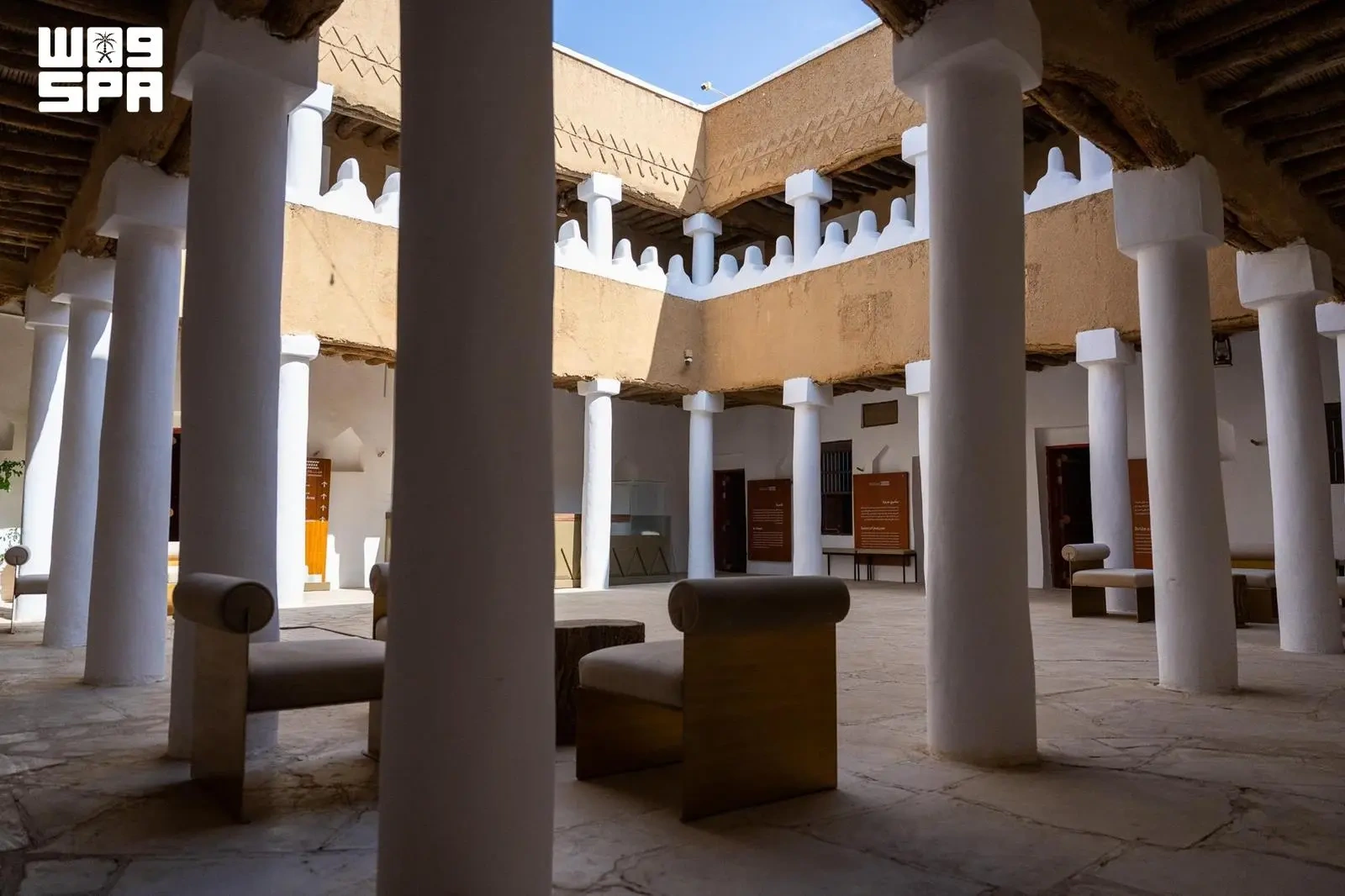
The heritage Al-Bassam House and the popular Al-Miswak Souq in the governorate of Unayzah in Al-Qassim region embody part of the governorate's architectural and social legacy, bearing witness to traditional Najdi architecture and the social and commercial patterns of life that Unayzah knew across various historical stages, along with the customs of dwelling, hospitality, and commercial and craft activities associated with them.
The heritage Al-Bassam House is located near the western gate of the old city of Unayzah, known as "Bab Al-Khala," adjacent to the popular Al-Miswak Souq. Through its facilities and internal layout, it presents a picture of the nature of family life in the past, while the souq, with its design inspired by traditional architecture, evokes the commercial activity the governorate witnessed in the past.
The heritage Al-Bassam House is considered one of the most prominent examples of traditional architecture in Unayzah. Its construction began in 1374 AH and was completed in 1378 AH, covering an area of about 3,500 square meters. It consists of one story, with mashrabiya windows and a wind tower, and includes 17 rooms of varying sizes and uses, including bedrooms, storage rooms, and guest reception majlises, some of which reach 10 meters in length, reflecting the standing of hospitality in the design of the traditional home.
The house's internal layout highlights aspects of family life at the time, through spaces designated for the family and for receiving guests, and the rooms and facilities associated with daily uses. It also included a spacious garden and an annex for related work, as well as a courtyard for raising livestock, reflecting the nature of domestic life in the past and the associated work, crop storage, and care of livestock.
The Heritage Commission's efforts contributed to restoring and activating the house, as its rooms now display various aspects of local cultural heritage, including traditional Najdi architecture, the mill, the bride and traditional jewelry, and the gypsum vessel used for storing dates, allowing visitors to learn about the details of daily life and aspects of local culture in Unayzah.
The Heritage Commission continues to operate and activate the house by organizing heritage workshops, activities, and events that enrich the visitor experience. It recently hosted workshops on woodwork and pottery, alongside interactive workshops for children, held over four days to coincide with Saudi National Day, attracting around 1,000 visitors.
On another aspect of the governorate's commercial legacy, the popular Al-Miswak Souq is one of its most prominent heritage landmarks. It is located west of the Sheikh Muhammad bin Salih Al-Uthaymin Mosque in central Unayzah and takes its name from the old Al-Miswak Souq, which contained about 200 shops. The souq was rebuilt in 1430 AH to include 52 shops constructed in the old style, taking into account the architectural elements that distinguished traditional shops.
The souq features a walkway surrounding the shop fronts, designed in the old heritage character, as well as an open majlis with traditional architectural details and inscriptions, connected to another open public majlis on the western side, in a design that evokes the urban characteristics of old souqs.
The old souqs of Unayzah served as centers for exchanging goods, practicing handicrafts and trades, and also played a role in fostering communication between residents and merchants. Today's Al-Miswak Souq allows visitors to explore the features of traditional commercial architecture and recall aspects of the economic and social activity the governorate once knew.
The heritage Al-Bassam House and the popular Al-Miswak Souq contribute to showcasing the architectural and cultural heritage of Unayzah, introducing visitors and new generations to its social and commercial history, and strengthening the presence of heritage sites within the cultural and tourism assets of Al-Qassim region, in line with the objectives of Saudi Vision 2030 to preserve national heritage and highlight its cultural value.