Dog-Sized: Earth's Largest-Ever Scorpion Discovered, Lived 415 Million Years Ago
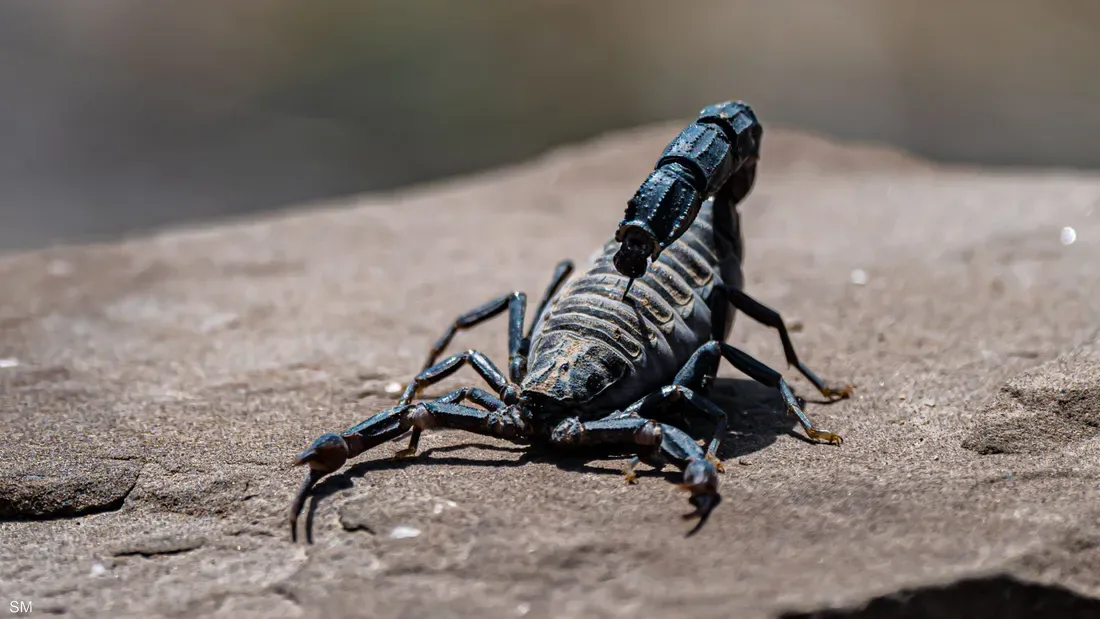
A recent study revealed a fossil of the largest scorpion known to Earth, more than a meter long and the size of a medium-sized dog, which lived 415 million years ago. The study settled the debate over its classification, showing that it hunted both in water and on land, and may have produced sounds by stridulation.
Scientists have made an exciting discovery concerning the largest known scorpion in Earth's history, exceeding one meter in length and the size of a medium-sized dog.
According to a recent study published in the scientific journal Palaeontology, fossils showed that this massive creature is the largest known scorpion to date.
The researchers said the scorpion, which they named Briarctyrus gigas, lived about 415 million years ago, when life on land was still in its earliest stages.
The scorpion fossil was found in the United Kingdom and was first described in the 1870s, but debate over its classification and true nature continued for decades.
Settling the Debate Over Its Identity
The recent study settled the debate over the giant scorpion's identity, with researchers using CT imaging techniques and traditional drawing methods confirming that it belonged to the scorpion family.
The results showed that it exceeded one meter in length, while its pincers were about 16 centimeters long — longer than the entire bodies of many species of modern scorpions.
The researchers believe this exceptional size was most likely linked to the absence of large competing predators during that era, allowing it to dominate its environment and food resources.
The study's lead researcher, paleontologist Richie Howard, said the giant scorpion lived before the ancestors of reptiles, mammals, and birds appeared on land, at a time when terrestrial life was extremely limited.
Remarkable Physical Characteristics
Scientists discovered protrusions on one of the giant scorpion's limbs, suggesting it may have produced sounds as parts of its body rubbed against each other — a mechanism known as stridulation, used by some scorpion species today — raising the possibility that this ancient creature had a means of acoustic communication or self-defense.
Fossils found in Wales also showed fin-like structures on its body, features similar to parts found in lobsters and crabs.
Based on this evidence, the researchers believe the giant scorpion hunted its prey both in water and on land, taking advantage of its ability to exploit both environments for food.
Extinction After 40 Million Years
Scientists suggest that intensified competition for food later contributed to the decline of this giant scorpion, but it may have persisted for some 40 million additional years before finally disappearing from the face of the Earth.