'Houthi Propaganda': The Manufacture of Illusory Victories
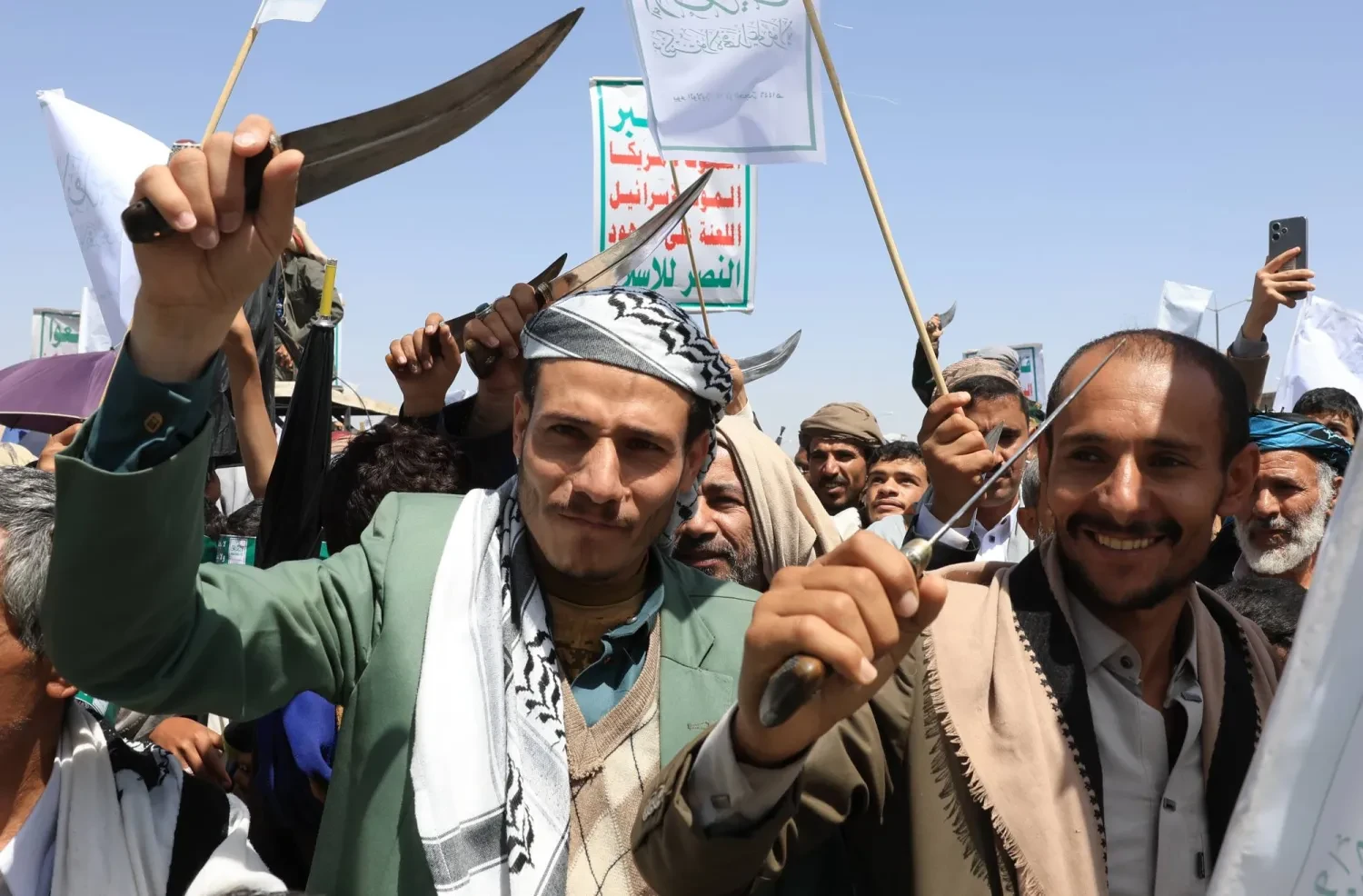
The war in Yemen is no longer fought only with rifles and missiles; words, images and digital platforms have become a parallel front no less important than the battlefields. Since its armed rise, the Houthi group has devoted exceptional attention to building a cohesive media and propaganda apparatus, drawing many of its organizational tools and mobilization methods from models associated with Iran, Lebanon's Hezbollah and Iran's Revolutionary Guard, with the aim of consolidating control over the public sphere, justifying the human and economic cost of the war, and crafting a political narrative that grants the group an alternative legitimacy inside Yemen and beyond.
From Victimhood to 'Divine Selection'
A reading of the evolution of Houthi discourse over the past two decades reveals a reshaping of its propaganda messages in line with political and military developments. In its early years in Saada province before 2011, Houthi rhetoric focused on defending Zaydi identity against what the group viewed as cultural and religious marginalization, capitalizing on the developmental and economic challenges faced by the province and its surroundings.
With the outbreak of popular protests in Yemen between 2011 and 2014, the group shifted to slogans of fighting corruption, improving living conditions and rejecting price hikes, which helped expand its base of support beyond its traditional sphere.
But after it seized the capital Sanaa and state institutions in late 2014, the discourse took a different turn, based on entrenching the concept of 'guardianship' as the foundation of political and religious legitimacy, while presenting the group's leadership as holding a religious and historical right to rule. In this context, much of the group's literature and media rhetoric linked political obedience to religious duty, treating opponents within an ideological framework that goes beyond conventional political disagreement.
As regional crises widened, especially after the war in Gaza, the Houthi propaganda machine moved to deploy the 'axis of resistance' discourse more extensively, presenting the group as a regional actor engaged in confronting Israel and the United States, in an attempt to strengthen its presence beyond Yemen's borders and win the sympathy of Arab audiences who may not be sufficiently aware of the complexities of the internal Yemeni scene.
Inflated Strikes and the 'Local Manufacturing' Myth
Houthi propaganda relies on turning military operations into tools of psychological and media influence no less important than their battlefield impact. Since the war broke out, missile and drone attacks against the Kingdom have been a central pillar of the group's media discourse, with these operations presented as indicators of strategic breakthroughs and a shift in the balance of power, even in cases where official statements and international briefings indicated the attacks had been intercepted or their effects contained.
This approach is not limited to framing military statements; it extends to the use of visual content to reinforce the media narrative and mislead public opinion. Reports by international and Arab fact-checking platforms have documented numerous cases in which images and videos circulated out of their true context as supposed documentation of the results of recent Houthi attacks.
In one case documented by Agence France-Presse's verification unit, a video of a fire in the Al-Rimal district of Riyadh was recirculated as showing the aftermath of a strike on King Khalid International Airport, until digital verification proved the incident had no connection to any military attack.
In another case, an old video from Khamis Mushait dating back several years circulated as documenting the interception of a new Houthi attack, while verification showed the clip had been posted long before the alleged event.
AI-Generated Fake Videos
Specialized anti-disinformation bodies have also tracked the spread of AI-generated clips claimed to show extensive destruction at airports and vital facilities inside the Kingdom following Houthi attacks, but technical analyses revealed clear signs of digital manipulation, including visual distortions and errors in the movement of people and objects inconsistent with real footage.
This propaganda dimension is complemented by constant promotion of the idea of 'local military manufacturing,' presented as proof of the group's self-sufficiency and technical capability.
Houthi media outlets are keen to portray ballistic missiles and drones as the product of purely Yemeni capabilities, whereas reports by the UN expert panel and international defense research centers have pointed to technical similarities and shared components between several Houthi systems and their Iranian counterparts.
International parties view these findings as indicators of external technical and military support exceeding the declared local capabilities, while the group uses the 'local manufacturing' narrative to bolster its image of self-reliance and entrench the narrative of steadfastness in the face of adversaries with superior military and economic capabilities.
Thus the propaganda battle is not limited to inflating the results of military operations; it extends to crafting a complete story that begins by showcasing the attack as an exceptional achievement and ends by presenting the weapon used as the fruit of independent local capabilities, reinforcing the mobilization messages directed at the domestic audience and giving the group greater room for maneuver in the regional media space.
Gradual Erosion of Consciousness
Houthi propaganda messages are managed through a vast centralized media apparatus, led by Al-Masirah channel, the group's main platform, alongside a number of channels, websites and local radio stations spread across its areas of control, and social media accounts.
This media diversity has helped the group reach different social segments: while satellite channels and digital platforms target the general public, local radio stations play an important role in reaching rural and remote areas suffering from poor internet services.
Among the most prominent mobilization tools are the so-called 'zawamil' — chants of tribal and martial character that over time became a means of mass mobilization accompanying military campaigns and mobilization events, playing an important role in building the combat narrative and strengthening a sense of belonging among supporters.
In the digital sphere, the group relies on vast networks of coordinated accounts on social media platforms, especially X, TikTok and Telegram, to amplify the spread of media messages, steer public discussions and reproduce the same narrative across hundreds of accounts simultaneously.
Inside its areas of control, media influence is not limited to platforms and screens. For years, the group has shut down a large number of opposition and independent media outlets and blocked local and international news websites, according to reports by international human rights and media organizations.
This runs parallel to a long process of reshaping the cultural and social environment through amendments to school curricula, the organization of summer centers, and flooding the public sphere with slogans, symbols and events of an ideological character, ensuring a constant presence of the group's messages in daily life.
When Rhetoric Collides with Reality
Despite the breadth of the Houthi propaganda apparatus, its ability to influence faces mounting challenges tied to the economic and living realities in the group's areas of control.
According to United Nations and international humanitarian organizations' reports, Yemen remains one of the world's worst humanitarian crises, with millions of Yemenis dependent on humanitarian aid and continued deterioration in income levels and basic services in the health, education and electricity sectors.
In this context, mobilization messages appear less able to address daily challenges linked to rising prices, declining job opportunities and irregular salary payments in a number of government sectors.
Moreover, the repetition of the same narratives and the expanding access to alternative sources of information via social media has, according to assessments by a number of researchers specializing in Yemeni affairs, led to declining levels of trust among segments of society compared with the first years of the war.
Although Houthi rhetoric has succeeded in attracting some sympathizers outside Yemen by exploiting regional issues that draw wide attention, foremost among them the Palestinian cause, the most important test remains within its areas of control themselves, where the propaganda narrative repeatedly collides with the pressures of economic and social reality.