Fish Farming in Jazan: From the Sea's Bounty to a Promising Productive Industry
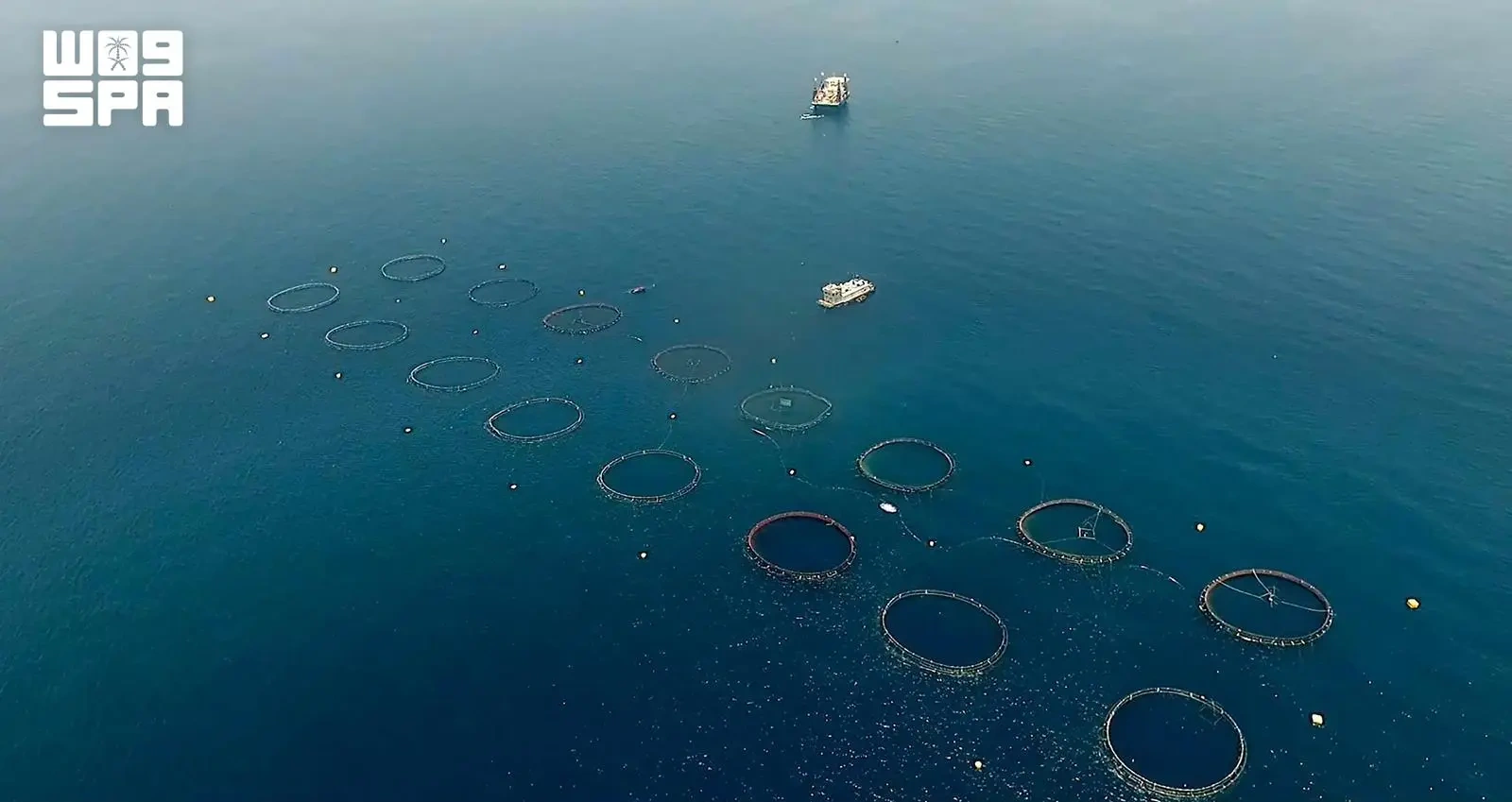
Along the Red Sea coast, people have long drawn part of their food and livelihood from the sea. But the transformations taking place in the fisheries sector in the Jazan region are taking this relationship to a new stage, moving beyond reliance on natural stocks to producing fish within their marine environment, through investment projects that employ modern technologies and international expertise, opening broader horizons for the fish farming economy.
In this context, His Royal Highness Prince Mohammed bin Abdulaziz bin Mohammed bin Abdulaziz, Emir of Jazan Region and Chairman of the Supervisory Committee of the Strategic Office for the Region's Development, yesterday launched an integrated fish farming project with investments of 270 million riyals.
The project comes as part of the Strategic Office for the Development of Jazan Region's efforts to attract quality investments and maximize the benefit of the region's marine assets, in partnership with the Ministry of Environment, Water and Agriculture, the Jazan Chamber, a number of local and foreign investors, and representatives of government agencies and the private sector, with the aim of transferring knowledge and international expertise, localizing modern technologies, and expanding private sector participation in the development of this economic activity.
The project's viability rests on the geographic and environmental assets Jazan enjoys: a Red Sea coastline stretching more than 300 kilometers, warm waters year-round, and a diverse marine environment — factors that provide suitable opportunities for developing fish farming activities and turning them into a sustainable productive sector.
Covering a total area of one million square meters, the project consists of two integrated operational units. The first is on land and includes ponds dedicated to fish spawning and early-stage care under the supervision of specialists and veterinarians, while the second relies on floating sea cages, equipped to protect fish from predators and birds, monitored by a specialized team responsible for their care and overseeing their growth.
The production process does not stop at the fish farming stage, but extends to 'sorting, cleaning, packaging, and distribution' operations, within an integrated production chain that aims to bring the product to local markets and prepare opportunities for future expansion into export markets, thereby enhancing the economic value of fish products and improving the efficiency of food supply chains.
The project aims to reach a production capacity of 5,000 tons annually by 2030, along with providing 350 jobs, expanding employment opportunities in fish farming-related activities and opening the way for national talent to work in breeding, production, operation, processing, and marketing.
The project's importance goes beyond its targeted production volume to the integration it can create with traditional fishing activities, contributing to diversifying fish supply sources, supporting local fish producers, and providing new investment opportunities in supporting services, food manufacturing, packaging, transport, and distribution — reflecting on the growth of domestic output and strengthening food security.
Eng. Ahmed Al-Majthoul, Director General of the Ministry of Environment, Water and Agriculture branch in Jazan Region, said in a statement to SPA that the launch of the project under the patronage and follow-up of His Royal Highness Prince Mohammed bin Abdulaziz bin Mohammed bin Abdulaziz, Emir of Jazan Region and Chairman of the Supervisory Committee of the Strategic Office for the Development of Jazan, is a step that reflects his keenness to strengthen the investment environment in the region, attract local and international partnerships, and empower initiatives that contribute to diversifying the economic base and opening new fields for investors.
Al-Majthoul stressed that the fish farming project represents a qualitative addition to the region's fisheries sector, and reflects the importance of expanding productive activities that invest in marine assets and employ modern technologies in developing water resources, in order to contribute to increasing the supply of fish products, supporting food security, and opening new investment opportunities in this sector.
The project builds on Jazan Region's marine assets and growing activity in the fisheries sector, creating opportunities for integration between fishing and fish farming activities and supporting the development of production, manufacturing, and marketing chains.
The project aligns with the targets of Saudi Vision 2030 in diversifying the national economy, raising the fish farming sector's contribution to food production, localizing technologies and expertise, and developing the fisheries sector, while also supporting the drive to raise per capita fish consumption to 25 kilograms annually, thereby boosting demand for local production.
From the sea that has remained a source of livelihood and food, Jazan is heading toward a new production horizon, in which marine resources are transformed into investment opportunities within an integrated system that is not limited to fish production but extends to employment, processing, manufacturing, and marketing. Once the project's phases are completed and it reaches its targeted capacity, the region will open a new chapter in its marine economy, marked by growing production, expanding investment, and broader horizons for a sustainable fish industry.