Among the World's Best in Tourism Infrastructure? 7 Areas Where the Kingdom Excels
Remarks by Tourism Minister Ahmed Al-Khateeb during the "2027 Budget Forum" drew attention from observers when he said: "I say it today with full confidence: Saudi Arabia is one of the largest countries in the world in terms of the availability of infrastructure that encourages us to expand in the tourism sector."
So what does the minister mean by tourism infrastructure? Does it refer only to building hotels and resorts, or does it encompass a broader system that begins before the tourist arrives in the Kingdom and continues until departure?
According to the concept of the tourism industry, infrastructure does not mean only the number of hotels, but also includes airports, aviation networks, roads, railways, ports and public transport, along with accommodation facilities, entertainment and cultural destinations, telecommunications networks and digital services, as well as security, health, water, electricity, municipal services, human cadres and the investment environment.
The World Economic Forum divides the "Infrastructure and Services" pillar of tourism into three main components: air transport, ground transport and ports, and tourism services and facilities. In the latest edition of the Travel and Tourism Development Index for 2026, Saudi Arabia ranked 29th globally among 110 countries, with a score of 4.45 out of 7, advancing three places compared with 2024 and 17 places compared with 2019.
أولًا: مطارات تربط المملكة بـ176 وجهة
Airports and air connectivity represent the first gateway to any tourism boom. During 2025, the Kingdom's airports received 140.9 million passengers on nearly 980,000 flights, a 9.6% increase in passenger numbers compared with the previous year.
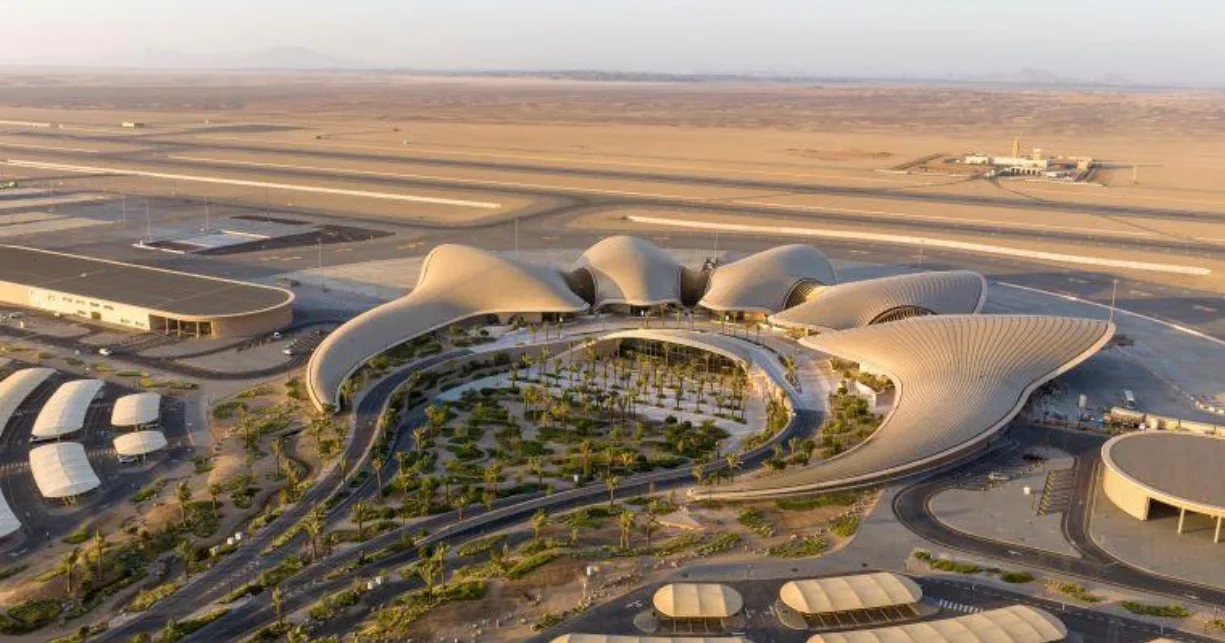
The number of destinations served by flights from Saudi airports also rose to 176 destinations in 66 countries, and the Kingdom ranked 18th globally on the air connectivity index. This coincides with airport development and capacity expansion, including the new Abha airport project, which targets reaching 13 million passengers annually.
ثانيًا: شبكة نقل تربط المدن بالوجهات
The tourist's journey does not end at the airport gate; it requires roads, railways, ports and public transport linking cities to tourist sites. The Kingdom provides an extensive road network between regions, in parallel with expanding rail and urban transport services and developing ports and cruise terminals.
The importance of this network lies in its ability to move tourist traffic from major cities to coastal, mountain, desert and heritage destinations, opening new areas to investment and visitation.
ثالثًا: طفرة فندقية ترفع الطاقة الاستيعابية
Investments in recent years have seen more than 500 hotels with over 100,000 rooms operating across the Kingdom's regions, while an additional 200,000 hotel rooms are under construction with a target completion date of 2030.
New tourism investments have also exceeded 120 billion dollars, with more than 50 global hospitality brands expanding in the Saudi market, reflecting the building of hotel capacity able to absorb expected growth in visitor numbers and major international events.
رابعًا: وجهات سياحية تُبنى
The Kingdom relies on developing integrated tourist destinations, rather than merely adding standalone hotels. These destinations include the Red Sea, Amaala, AlUla, Diriyah, Qiddiya, NEOM, Soudah Peaks, and city-center projects.
Each destination includes a network of airports, roads, hotels, restaurants, marinas, entertainment and cultural centers, and public services. In the Red Sea destination, 11 hotel facilities with 1,439 rooms have entered operation, while the destination targets reaching 50 hotels and about 8,000 rooms by 2030.
خامسًا: بنية رقمية تختصر رحلة السائح
Digital infrastructure has become an essential part of destination competitiveness, starting with e-visas, booking and payment, through to maps, tickets and visitor services.
Since launching the electronic tourist visa in 2019, the Kingdom has continued to ease entry, before launching the pilot phase of the "tourist package visa," which combines flight tickets, licensed accommodation and visa procedures into a single digital experience, along with expanding the use of apps, digital platforms and artificial intelligence to improve the visitor experience.
سادسًا: خدمات مساندة تجعل الموقع وجهة حقيقية
A beach, mountain or heritage site does not become a tourist destination simply by possessing natural or historical assets; it needs electricity, water, telecommunications, internet, healthcare, security, civil defense, cleanliness, waste management, signage and visitor service centers.
The minister's talk of "integrated infrastructure" means these services are developed in parallel with hotels, airports and destinations, raising the quality of the experience and giving investors greater confidence to operate their projects year-round.
سابعًا: تمويل وكوادر لتشغيل المنشآت
Buildings and facilities require a system of financing, operations and human talent. Regulatory reforms, incentives, financing channels, the Tourism Development Fund and the air connectivity program have contributed to easing investors' entry and expanding projects.
At the same time, the Kingdom trains its youth annually in tourism and hospitality specializations, providing training opportunities at the world's best institutes, to ensure human resources keep pace with the rapid expansion of facilities and destinations.
This expansion has been reflected in the sector's figures; the Kingdom received about 123 million domestic and inbound visitors during 2025, with tourist spending reaching 304 billion riyals, while it targets reaching 150 million visitors and spending of 550 billion riyals by 2030.
Thus, the Kingdom's strength lies not in a single element, but in the simultaneous expansion of airports, hotels, roads, destinations, digital services, financing and training—which is what Al-Khateeb meant when he said that the available infrastructure encourages continued expansion in the tourism sector.