Falconer at King Abdulaziz Falconry Festival Details 50 Years of Evolution in Falconry Practices
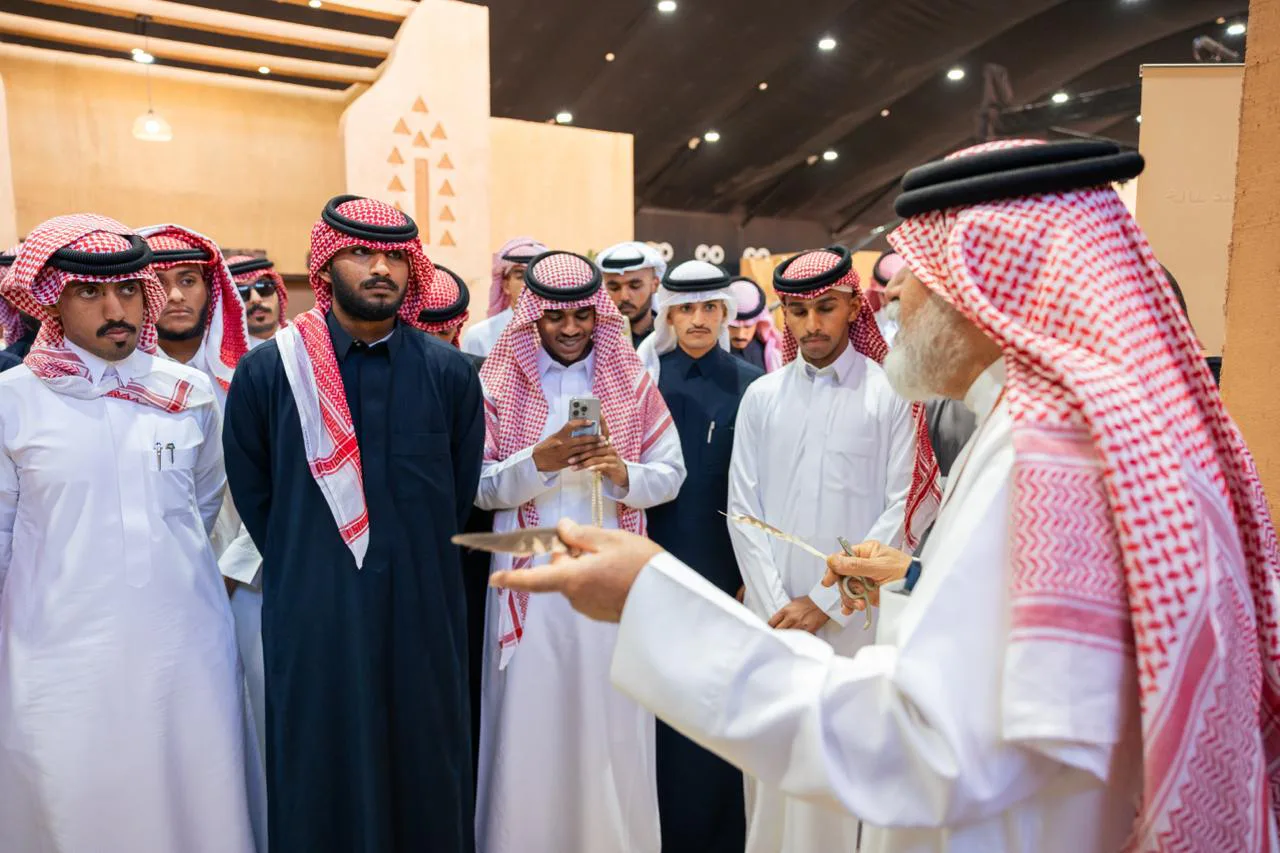
Falconry has seen remarkable development over the past five decades thanks to technological advances in training and tracking tools, transport and communications, and hunting and camping equipment, while preserving its inherited traditions. Falconer Khaled bin Abdullah Al-Oweidi, during his participation in the King Abdulaziz Falconry Festival 2026 in Melham north of Riyadh, explained that…
The practice of falconry has undergone remarkable development over the past five decades, benefiting from scientific and technological progress in developing the tools used for training and tracking falcons, as well as transport and communications and hunting and camping equipment, giving falconers more diverse and comfortable options and making the practice of falconry easier, while preserving its inherited traditions.
Falconer Khaled bin Abdullah Al-Oweidi, during his participation in the King Abdulaziz Falconry Festival 2026, organized by the National Center for Falcons in Melham north of Riyadh, explained that the practice of falconry some 50 years ago relied on limited tools and simple capabilities, compared with the modern technologies and equipment available today that have changed training and hunting methods.
He explained that training falcons in the past began with taming the wild falcon and teaching it gradually, using the lure (milwah) made from houbara wings: a person would stand at a distance and wave the houbara feathers at the falcon until it became accustomed to flying and returning to its owner, after which the falconer would move on to training it on the houbara itself.
He noted that tracking falcons was limited to the telescope (darbil), the binoculars falconers used to monitor the falcon after release, especially if it moved far away or disappeared from sight, adding that losing a falcon was a major challenge, as searching for it required great effort and time, and it might be impossible to find, especially when the car broke down, the roads were difficult, or the tires were punctured.
He added that modern tracking devices have transformed the practice of falconry, as falconers can now locate their falcon and reach it when it flies far away, reducing the hardship of searching and giving falconers greater peace of mind during hunting trips.
Regarding transport, Al-Oweidi said that four to six falconers used to share one vehicle on hunting trips, given the limited vehicles and resources available at the time, whereas today's cars are more advanced and better equipped, with desert trip supplies that make travel easier for falconers.
Al-Oweidi reviewed the differences between past and present means of communication, explaining that falconers would agree before setting out in the morning on a specific meeting place and time, and used high-beam car lights to signal the discovery of houbara or their tracks or other prey; one of them would turn on the lights to attract the attention of his companions from a distance, whereas modern wireless communication devices have made direct contact, the exchange of location coordinates, and easy arrival possible.
He noted that the development also extended to desert camping equipment: in the past, a falconer would make do with a simple bedding roll that he tied with ropes and placed in the car, whereas today there are spacious, well-equipped tents that allow more comfortable stays during hunting trips.
He stressed that the number of falconers and falcons was limited in the past, compared to the present, which has seen the circle of those interested in falconry widen and the practice spread, benefiting from the development of the tools and services associated with it.
Al-Oweidi noted that each era has its own circumstances and capabilities, but technological development has made the practice of falconry easier and safer, greatly reducing the hardships falconers faced in the past, stressing that means of transport, tracking, communication, and camping have seen major changes, while falconry remains an authentic heritage.
Khaled bin Abdullah Al-Oweidi is a traditional healer and falconer with 50 years of experience in treating falcons and their injuries and splinting their feathers, known as 'tawseer.' He is participating in the King Abdulaziz Falconry Festival 2026 with a pavilion where he receives falconers and provides them with guidance on caring for and treating their falcons, drawing on his long experience in this field.